

The Jobsite Is Changing
For decades, contractors often believed bigger equipment automatically meant higher productivity.
Bigger loaders.
Larger excavators.
More horsepower.
While larger equipment certainly has its place, today's projects are changing.
Across Maine, New Hampshire, Vermont, Massachusetts, and throughout New England, contractors are increasingly finding themselves working in locations where access matters more than machine size.
The challenge isn't always moving more material.
The challenge is getting equipment into the work area efficiently.
As property development patterns evolve and homeowners invest more heavily in existing properties, contractors are discovering that maneuverability and accessibility have become major productivity factors.

Also Read📖Are Oversized Machines Costing Contractors More on Small Jobsites?
Aging Residential Neighborhoods
Many communities throughout Bangor, Portland, Southern Maine, New Hampshire, and Vermont were developed decades ago.
These established neighborhoods often feature:
- Mature landscaping
- Existing patios
- Retaining walls
- Fenced yards
- Narrow side access
- Dense property layouts
Contractors must work around existing improvements rather than building on open lots.
Backyard Living Is Booming
Homeowners continue investing heavily in outdoor spaces.
Popular projects include:
- Patios
- Outdoor kitchens
- Fire pits
- Pool installations
- Retaining walls
- Landscape renovations
Many of these projects occur behind homes where access is limited to a standard residential gate.
Utility Infrastructure Improvements
Municipalities and utility providers continue upgrading:
- Water services
- Sewer systems
- Drainage infrastructure
- Electrical systems
- Communication networks
Many of these projects require equipment capable of working in confined spaces.
Infill Development Is Expanding
Developers are increasingly building within existing communities rather than expanding outward.
This creates projects between existing structures where compact equipment becomes essential.
The Biggest Challenge Isn't Material Volume

One of the biggest misconceptions in construction is that larger projects always require larger machines.
Today's jobsites often present a different challenge.
Contractors routinely encounter situations where:
- A machine won't fit through a gate
- Existing landscaping must be preserved
- Turf damage becomes a concern
- Working space is extremely limited
- Homeowners expect minimal disruption
In many cases, the ability to access the work area efficiently becomes more important than machine size.
Also Read 📖How Contractors Are Solving Labor Shortages with Compact Equipment in Maine
Common Tight-Access Projects Across New England
Backyard Hardscape Installations
Patios, walkways, retaining walls, and outdoor living spaces often require material movement through narrow access points.
Fence Construction
Contractors frequently need to transport materials and dig post holes within established residential properties.
Utility Service Upgrades
Drainage systems, water lines, electrical conduit, and communications infrastructure often require work in confined spaces.
Landscape Renovations
Landscape redesign projects frequently involve moving significant amounts of material through limited-access areas.
Pool Installations
Pool contractors regularly face fenced backyards and access restrictions.
Residential Excavation
Many excavation projects take place close to homes, garages, and established landscaping.
Property Maintenance Projects
Property managers and maintenance companies often work in areas where larger equipment simply isn't practical.
Also Read📖Mini Skid Steer Attachments That Deliver the Highest Productivity Gains for Contractors
The Backyard Access Challenge
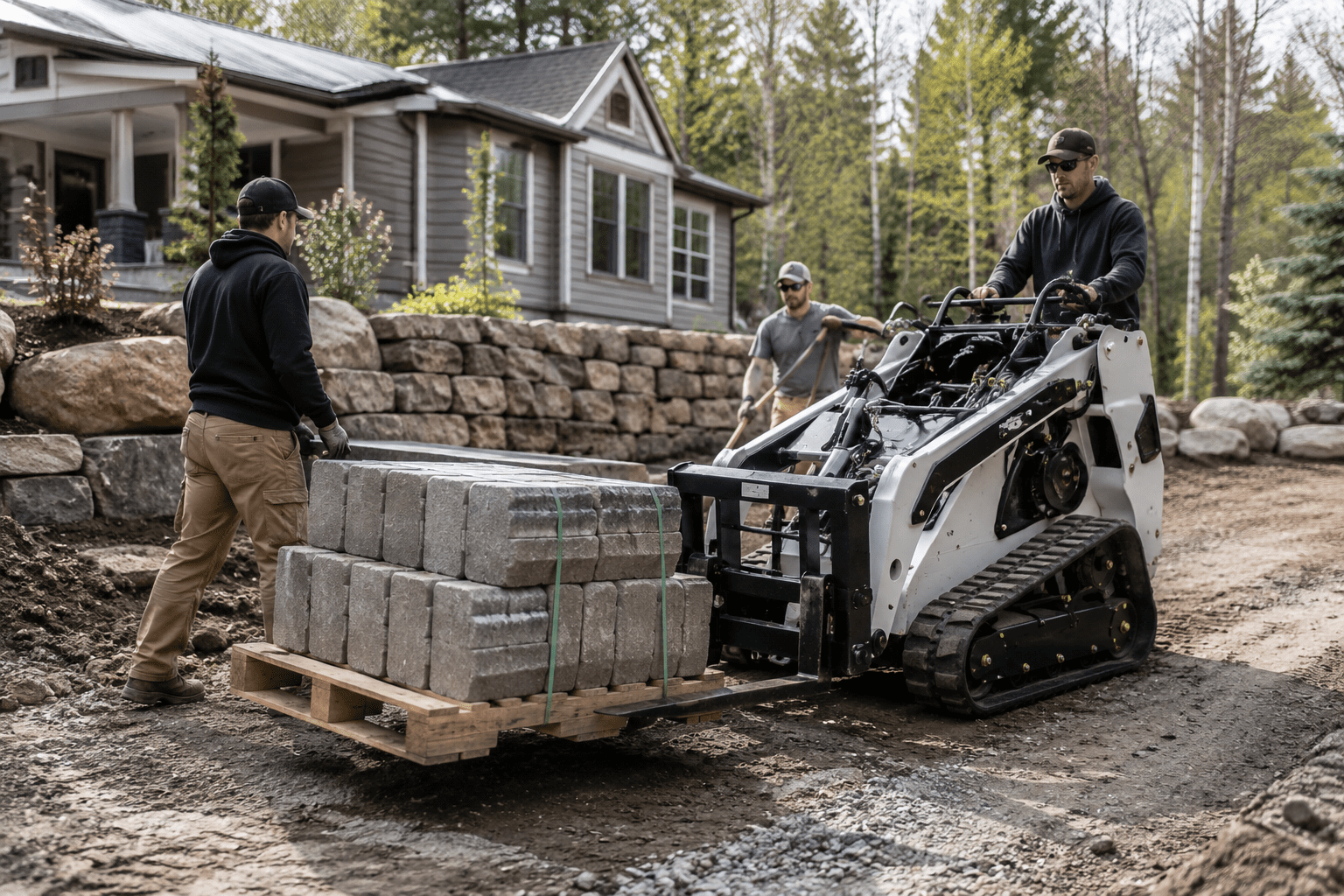
Imagine a contractor in Bangor installing a retaining wall behind a customer's home.
The project requires:
- Retaining wall block
- Gravel
- Drainage pipe
- Base material
The only access point is a 42-inch backyard gate.
A traditional skid steer may not fit.
Without compact equipment, crews often rely on:
- Wheelbarrows
- Hand carts
- Additional labor
- Multiple trips
The result is increased labor costs and longer project timelines.
A mini skid steer changes the equation by bringing mechanized productivity directly into the work area.
Check out the Attachments
Why Compact Equipment Is Winning
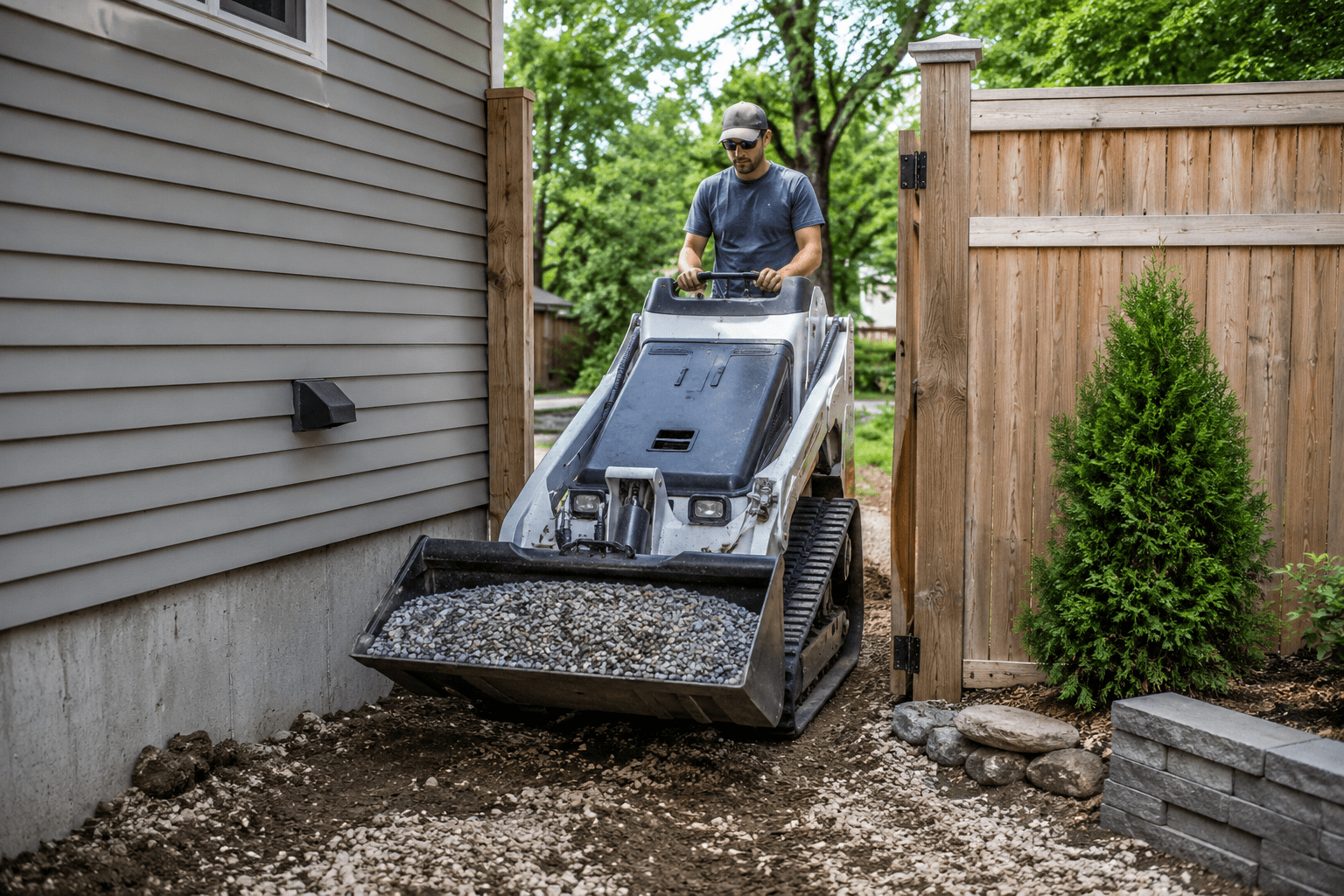
Contractors throughout Maine and New England are increasingly investing in compact equipment because it directly addresses modern access challenges.
Benefits include:
- Access through standard gates
- Reduced property damage
- Easier transportation
- Better maneuverability
- Increased productivity
- Lower operating costs
- Faster project completion
Compact equipment allows contractors to spend more time completing work and less time overcoming access limitations.
Build Your Machine https://neminiskids.com/build-your-machine/
Operational Impact: Accessibility Creates Efficiency
The most productive machine isn't necessarily the largest machine.
It's the machine that can reach the work area.
When contractors improve access efficiency, they often experience:
- Faster project completion
- Reduced labor costs
- Improved customer satisfaction
- Less property damage
- Greater scheduling flexibility
- Increased profitability
Accessibility has become a productivity advantage.
Which Mini Skid Steer Is Right for Tight-Access Projects?
DRT 450T

The DRT 450T is ideal for landscapers, hardscape installers, property maintenance companies, and residential contractors.
Its compact size makes it an excellent choice for:
- Backyard projects
- Fence installations
- Landscape renovations
- Tight-access work
DRT 480i

The DRT 480i is one of the most versatile machines available for contractors handling multiple project types.
Excellent for:
- Landscaping
- Grading
- Utility work
- Residential construction
- Property improvement projects
Its flexibility makes it a favorite among contractors working throughout Maine and New England.
V1000

Growing contractors often choose the V1000 for its increased lifting capacity while maintaining compact maneuverability.
Ideal for:
- Excavation contractors
- Site development
- Material handling
- Larger landscape projects
XC1100

The XC1100 provides maximum productivity for contractors who need serious lifting capability while maintaining access advantages.
Excellent for:
- Commercial landscaping
- Construction projects
- Earthmoving applications
- High-volume contractors
Explore Available Machines https://neminiskids.com/machines/
Ready for the Next Generation of Jobsites?
The future of construction, landscaping, excavation, and property maintenance is becoming increasingly access-focused.
Contractors who invest in equipment built for tight-access environments are positioning themselves to complete projects faster, reduce labor demands, and improve profitability
Tight-access projects are no longer a niche market.
They are becoming a major part of modern construction, landscaping, excavation, and property improvement work throughout New England.
Contractors who recognize this shift and invest in equipment designed for accessibility, maneuverability, and efficiency will be best positioned for long-term success.
Compact equipment isn't replacing larger machines.
It's solving problems larger machines often cannot.
📞Contact

Frequently Asked Questions
1. Why are tight-access projects becoming more common across New England?
Tight-access projects are increasing due to aging neighborhoods, backyard living upgrades, utility infrastructure improvements, landscape renovations, pool installations, and urban infill development. Many projects now occur in established areas where space is limited and access is restricted.
2. What is considered a tight-access construction project?
A tight-access project is any job where equipment must operate in confined spaces, such as fenced backyards, narrow side yards, areas between structures, established landscapes, or locations with limited entry points.
3. Why is equipment access becoming a bigger challenge for contractors?
Many modern projects take place in developed residential and commercial areas where contractors must work around existing homes, landscaping, fences, patios, retaining walls, and utilities. Access limitations often impact productivity more than the amount of material being moved.
4. What types of projects commonly require compact equipment?
Common tight-access projects include backyard hardscape installations, retaining wall construction, drainage corrections, utility upgrades, fence installation, residential excavation, pool installations, landscape renovations, and property maintenance work.
5. How do mini skid steers help with tight-access jobsites?
Mini skid steers provide the power of larger equipment in a compact footprint. They can often fit through standard gates and maneuver in confined areas while handling materials, grading, digging, trenching, and transporting supplies.
6. Can a mini skid steer fit through a backyard gate?
Many mini skid steer models are specifically designed for narrow-access environments and can fit through standard residential gates, making them ideal for backyard projects where larger equipment cannot reach the work area.
7. Do compact machines reduce property damage?
Yes. Mini skid steers typically exert less ground pressure and have a smaller footprint than larger machines, helping reduce turf damage, landscape disruption, and repair costs on finished properties.
8. Which NE Mini Skids machine is best for tight-access projects?
The DRT 450T is often a great choice for landscapers, hardscape contractors, and property maintenance professionals working in confined residential environments. Contractors needing additional versatility may also consider the DRT 480i, V1000, or XC1100 depending on project requirements.
9. How can compact equipment improve contractor productivity?
Compact equipment allows crews to bring mechanized productivity directly into work areas that would otherwise require manual labor. This helps reduce labor demands, improve efficiency, shorten project timelines, and increase profitability.
10. Are tight-access projects expected to continue growing?
Yes. As homeowners continue investing in existing properties and communities focus on redevelopment and infrastructure improvements, demand for compact equipment capable of working in tight-access environments is expected to continue growing throughout Maine and New England.


