Category Construction & Site Development

Mini Skid Steer Hydraulic Flow & GPM Explained| NE Miniskids

Close-up of mini skid steer hydraulic hoses and fittings with illustrated fluid flow, alongside a tracked mini skid steer operating a hydraulic auger to demonstrate GPM and attachment performance.

Mini skid steer hydraulic flow determines how effectively a machine powers hydraulic attachments. Measured in gallons per minute (GPM), hydraulic flow influences attachment operating speed, while PSI (pounds per square inch) determines the pressure available to generate force and torque. Understanding the difference between GPM and PSI helps contractors choose the right mini skid steer for augers, trenchers, brush cutters, and other hydraulic attachments—improving equipment compatibility, jobsite productivity, and overall performance.

Tracks vs. Wheels: Which Mini Skid Steer Is Better?

A tracked mini skid steer is generally better suited to soft, muddy, uneven or loose terrain where traction and flotation are priorities. A wheeled mini skid steer may be better suited to firm surfaces such as pavement, compacted gravel and other conditions where tire performance matches the workload. Contractors should choose between tracks and wheels based on terrain, ground disturbance, seasonal conditions, transportation, maintenance and the surfaces where the machine will work most often.

Complete Mini Skid Steer Guide for New England Contractors

image of a residential construction site with a miniskid and attachments displayed in front of him.

A mini skid steer is compact, hydraulically powered construction equipment designed to operate interchangeable attachments for digging, grading, material handling, trenching, augering, landscaping and property-maintenance work. Its smaller footprint makes it particularly useful on residential properties and restricted-access jobsites where larger loaders may be difficult to maneuver. The right mini skid steer should be selected according to workload, access, lifting capacity, hydraulic requirements, terrain, attachments and transportation needs.

Mini Skid Steer vs. Compact Track Loader: Which Do You Need?

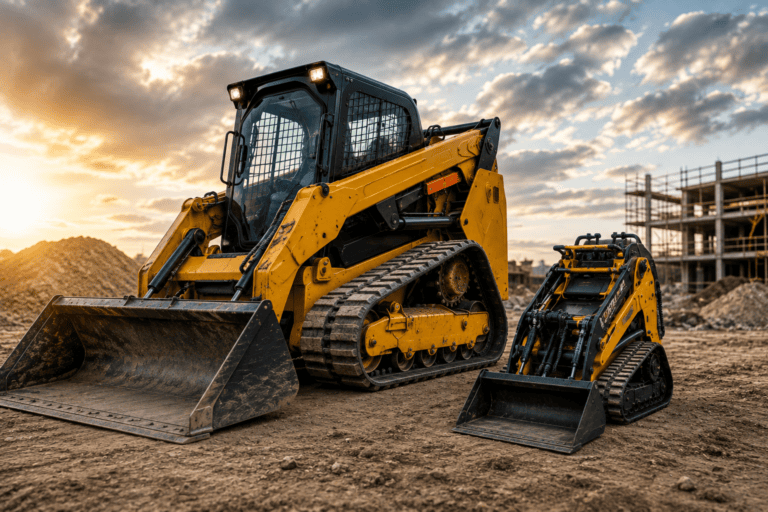
Large compact track loader and smaller tracked mini skid steer positioned side by side on a construction site, illustrating the size and footprint differences when choosing equipment for different workloads and jobsite conditions.

A mini skid steer is generally the better choice for tight-access jobs, residential construction, landscaping, frequent transportation, and projects where reducing manual labor is a priority. A compact track loader (CTL) is typically better suited for heavy lifting, large-volume excavation, material handling, and high-production jobsites. The best choice depends on the contractor’s actual workload, access restrictions, lifting requirements, attachment needs, transportation setup, and expected machine utilization.

How Mini Skid Steers Are Transforming Construction & Site Development Across New England

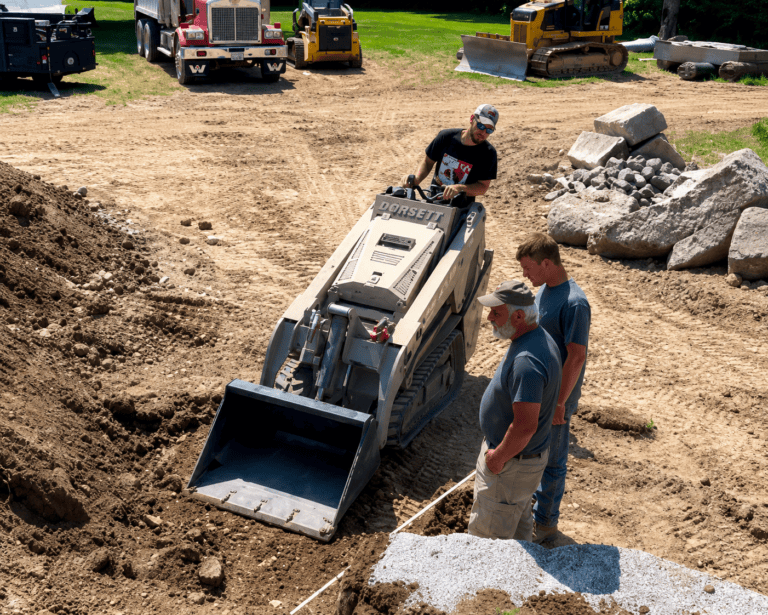
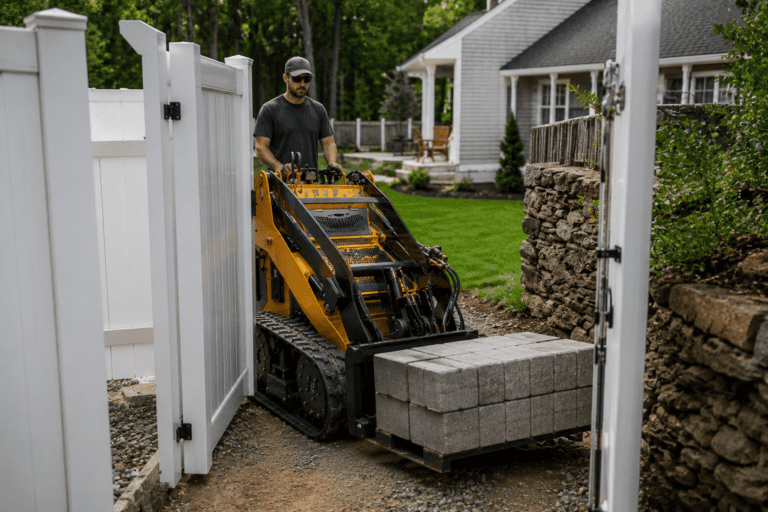
v1000 being used in a construction site to build the layers of a stone walkway.

Construction and site development have changed dramatically over the last decade. Labor shortages, tighter project schedules, and rising operating costs have forced contractors to find smarter ways to work. Mini skid steers have become one of the most valuable pieces of equipment on today's jobsites, allowing crews to move materials faster, reduce manual labor, work in confined spaces, and complete projects more efficiently. Whether you're preparing a residential lot, developing commercial property, or installing underground utilities, the right compact loader can significantly improve productivity and profitability.

Why Tight-Access Projects Are Growing Across New England and What Contractors Need to Know

Across Maine and New England, contractors are seeing a significant increase in projects that require precision, maneuverability, and compact equipment rather than oversized machinery. From backyard hardscape installations and drainage corrections to utility upgrades and infill development, today's jobsites are becoming tighter, more complex, and more access-restricted. Contractors who adapt to these changing project environments are discovering that mini skid steers and compact equipment provide a major competitive advantage.

How Contractors Are Solving Labor Shortages with Compact Equipment in Maine

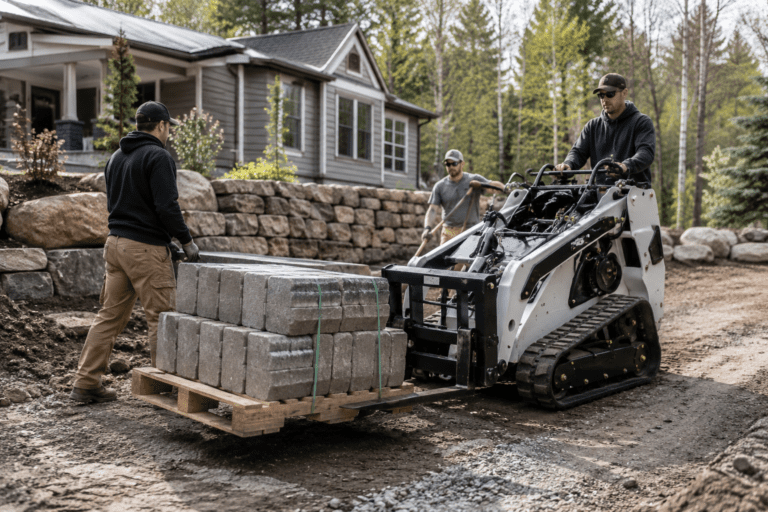
a crew uses a miniskid with forks attachment to move a pallet of cement landscaping blocks.

Contractors across Maine and New England are facing one of the biggest workforce challenges in decades. Skilled labor is harder to find, labor costs continue to rise, and project demands keep growing. Rather than relying solely on hiring more workers, many contractors are turning to compact equipment and mini skid steers to increase productivity, reduce manual labor, and complete more projects with smaller crews.