

Tracks vs. Wheels: Which Mini Skid Steer Is Better for Your Work?
60-Second Read
Tracks and wheels each have advantages on a mini skid steer, but neither is automatically better. Tracked machines are often favored where traction, flotation, uneven terrain, soft ground and muddy conditions are important. Wheeled machines can make sense where the equipment spends more time on firm surfaces and where tire replacement, maneuverability or operating conditions favor wheels.
For New England contractors, terrain deserves special attention because a machine may encounter mud in spring, turf and soil in summer, leaves and uneven ground in fall, and snow or frozen surfaces in winter.
The best decision is not simply tracks vs. wheels.
It is:
Where will this machine spend most of its revenue-producing hours?
Choose the undercarriage for those conditions.
Key Takeaways
🌧️ Tracks generally shine on soft or uneven ground where flotation and traction matter.
🛞 Wheels can be advantageous on firm surfaces and in applications where tires better match the work environment.
🌿 Ground conditions matter as much as the job itself. Landscaping, excavation and property maintenance can put the same machine on very different surfaces.
❄️ New England seasons complicate the decision. Mud, snow, freeze-thaw cycles and pavement all deserve consideration.
💰 Don't compare purchase price alone. Wear, replacement, downtime and how often the machine can work all affect ownership value.
🎯 Choose for the terrain you encounter most frequently—not the rare job.
Tracks vs. Wheels Is Really a Terrain Question
Contractors love equipment comparisons.
Which has more power?
Which lifts more?
Which is faster?
But when you're deciding between tracks and wheels, the most important question isn't sitting on the specification sheet.
It's under your boots.
What does the ground look like?
Imagine two contractors doing similar landscape work.
One spends most of the week on soft residential lots, freshly disturbed soil and muddy access routes.
The other regularly works on paved commercial properties, compacted gravel and established hard surfaces.
They may need similar attachments and perform similar tasks—but the ideal undercarriage may be completely different.
That's why the decision needs to start with the working surface, not someone's general opinion that tracks or wheels are "better."
Also Read📖Mini Skid Steer vs. Compact Track Loader: Which Do You Need?
1. Where Tracks Have the Advantage
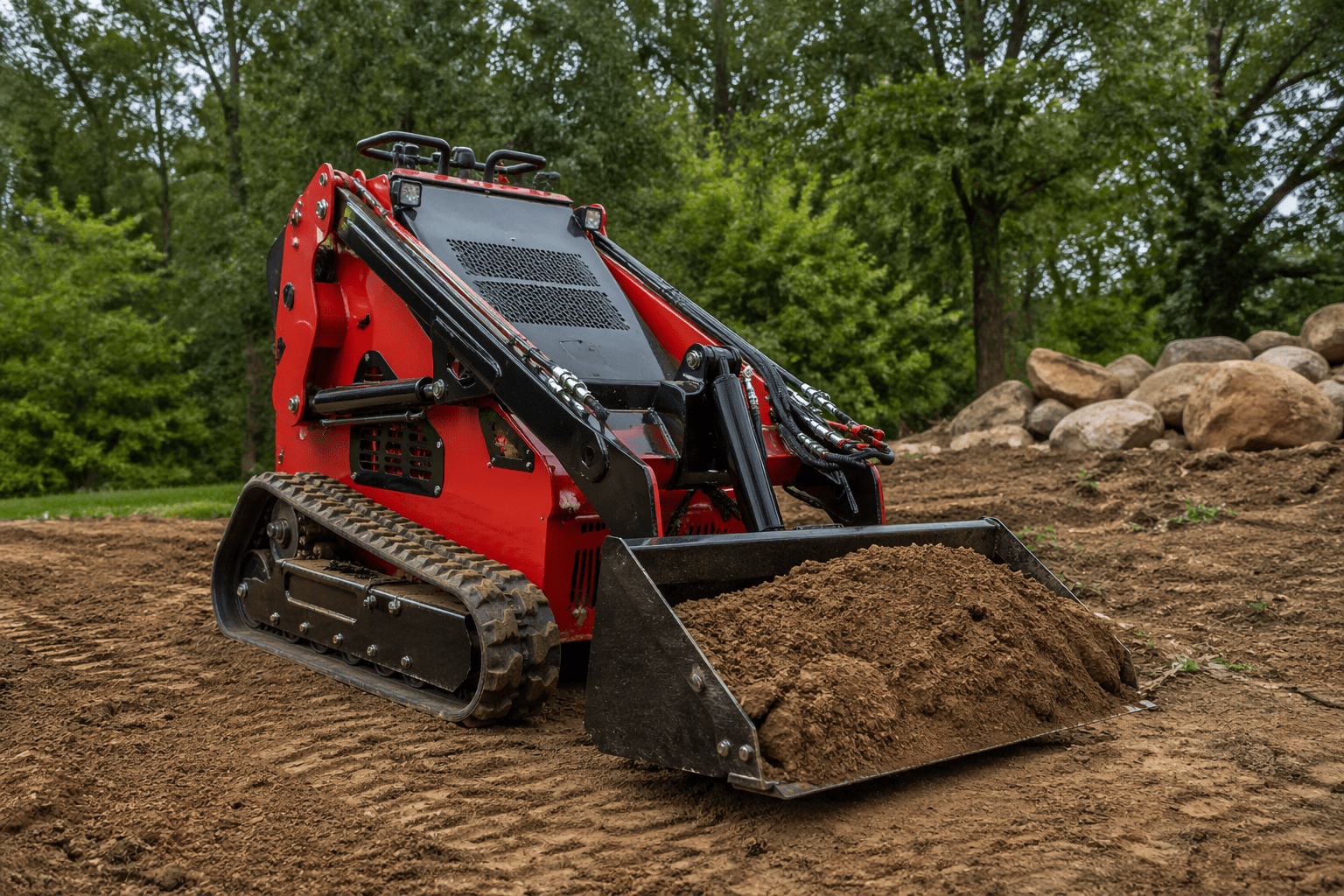
Tracked mini skid steers distribute machine weight across a larger contact area than four individual tires.
That can be useful when operating on:
🌧️ Mud
🌱 Soft soil
🪨 Uneven terrain
🌲 Land-management projects
🚧 Excavated jobsites
❄️ Certain snow conditions
One of the biggest benefits is flotation.
On soft ground, distributing the machine's weight across the tracks can help reduce sinking compared with concentrating the load at individual tires.
Traction is another reason contractors gravitate toward tracks.
When a machine needs to push, dig or travel across loose or irregular surfaces, consistent ground contact can become a meaningful operating advantage.
Consider Tracks When:
- Soft ground is common
- Mud is an everyday reality
- The property is uneven
- Excavation is a major part of the workload
- Maintaining traction is more important than hard-surface travel
- The machine works across undeveloped land
For many New England contractors, those conditions aren't unusual.
Also Read 📖Is a mini skid steer good for property maintenance and land management?
2. Where Wheels Can Make More Sense
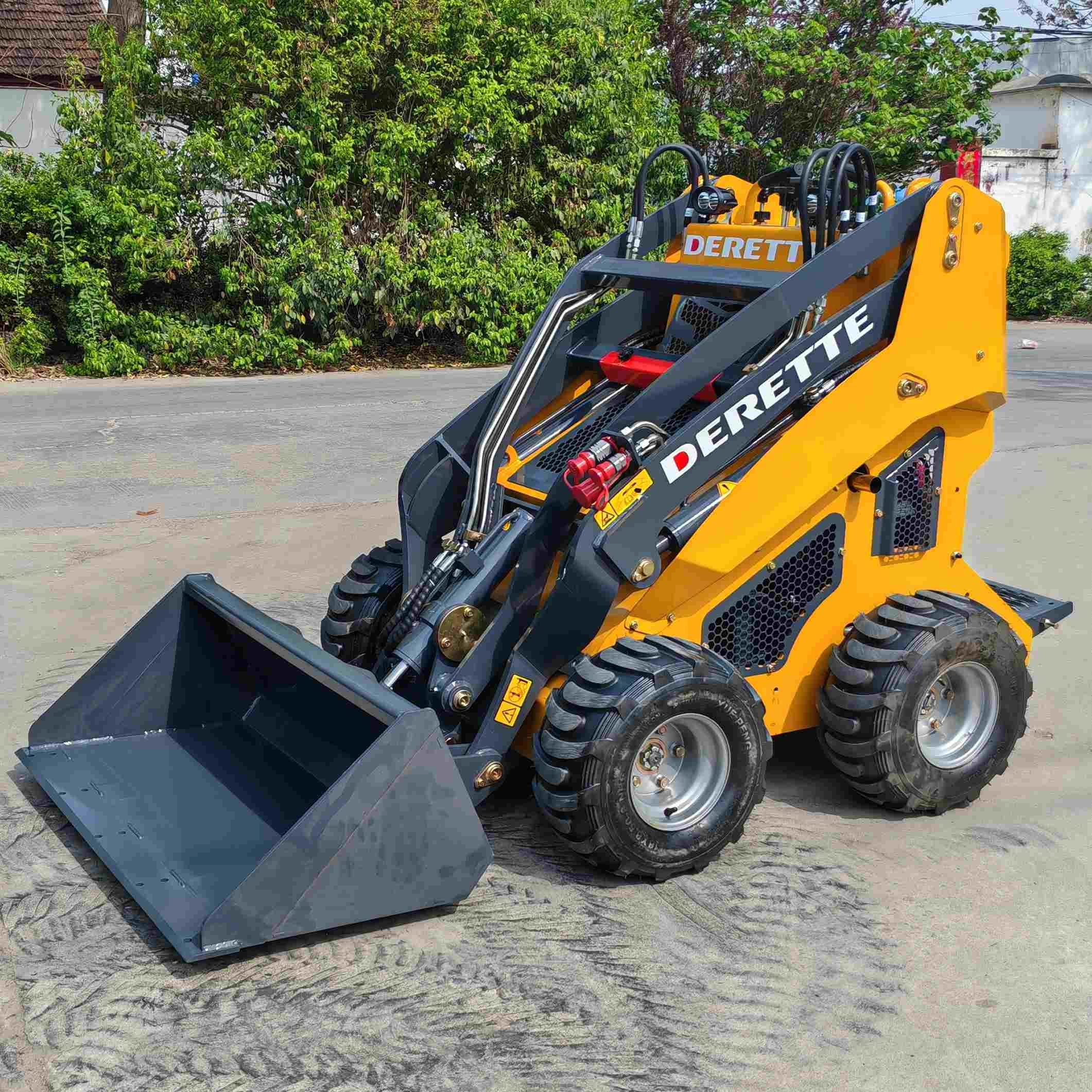
Tracks have advantages, but that doesn't mean every contractor should automatically choose them.
Wheeled machines can be a practical option when much of the workload occurs on:
🏢 Commercial properties
🛣️ Pavement
🪨 Compacted gravel
🏡 Firm residential surfaces
🚧 Developed jobsites
Tires also create a different maintenance equation.
A damaged tire and a worn track are not the same repair, and businesses should understand the replacement costs, expected wear and downtime associated with either configuration before purchasing.
Hard surfaces are particularly important.
Repeated turning on abrasive pavement can create significant wear on tracked undercarriage components. A contractor whose machine spends much of its life on hard, developed surfaces should take that operating environment seriously.
The point isn't that wheels "beat" tracks on pavement in every situation.
It's that undercarriage wear should match undercarriage use.
Also Read 📖How Mini Skid Steers Are Transforming Construction & Site Development Across New England
3. What About Lawns and Finished Properties?
This is where things get more complicated.
Many landscaping and residential contractors want equipment that can work on finished properties without creating unnecessary damage.
A tracked machine may spread its weight over a larger area, but turning technique, machine weight, soil moisture and operator behavior all affect ground disturbance.
A machine can still tear turf if the operator performs aggressive counter-rotation turns.
Likewise, tires can leave ruts when the soil is saturated.
So rather than asking:
"Which one won't damage a lawn?"
Ask:
"Which configuration, combined with proper operating technique, best fits the ground conditions we normally encounter?"
That distinction matters.
The undercarriage helps.
The operator still matters.
Also Read 📖What is the best mini skid steer for landscaping and hardscaping?
4. New England Contractors Need to Think in Four Seasons
This is where our market is different from equipment operating in consistently dry environments.
A New England machine can experience radically different conditions throughout the year.
🌷 Spring — Mud Season
Soft soils, saturated ground and freeze-thaw conditions can make traction and flotation especially important.
☀️ Summer — Landscaping & Construction
Conditions range from finished lawns to dry soil, gravel, pavement and active excavation sites.
🍂 Fall — Property & Land Work
Leaves, uneven ground, brush, soft soils and seasonal cleanup can put machines into changing terrain.
❄️ Winter — Snow & Frozen Ground
Snow, ice, pavement and frozen soil introduce an entirely different traction and wear equation.
If the goal is year-round equipment utilization, don't select the undercarriage based only on what the machine will do in July.
Ask:
Where will it work in April, August, November and January?
That answer may change the decision.
Also Read 📖Are Oversized Machines Costing Contractors More on Small Jobsites?
5. Use the NE Mini Skids Terrain Test™
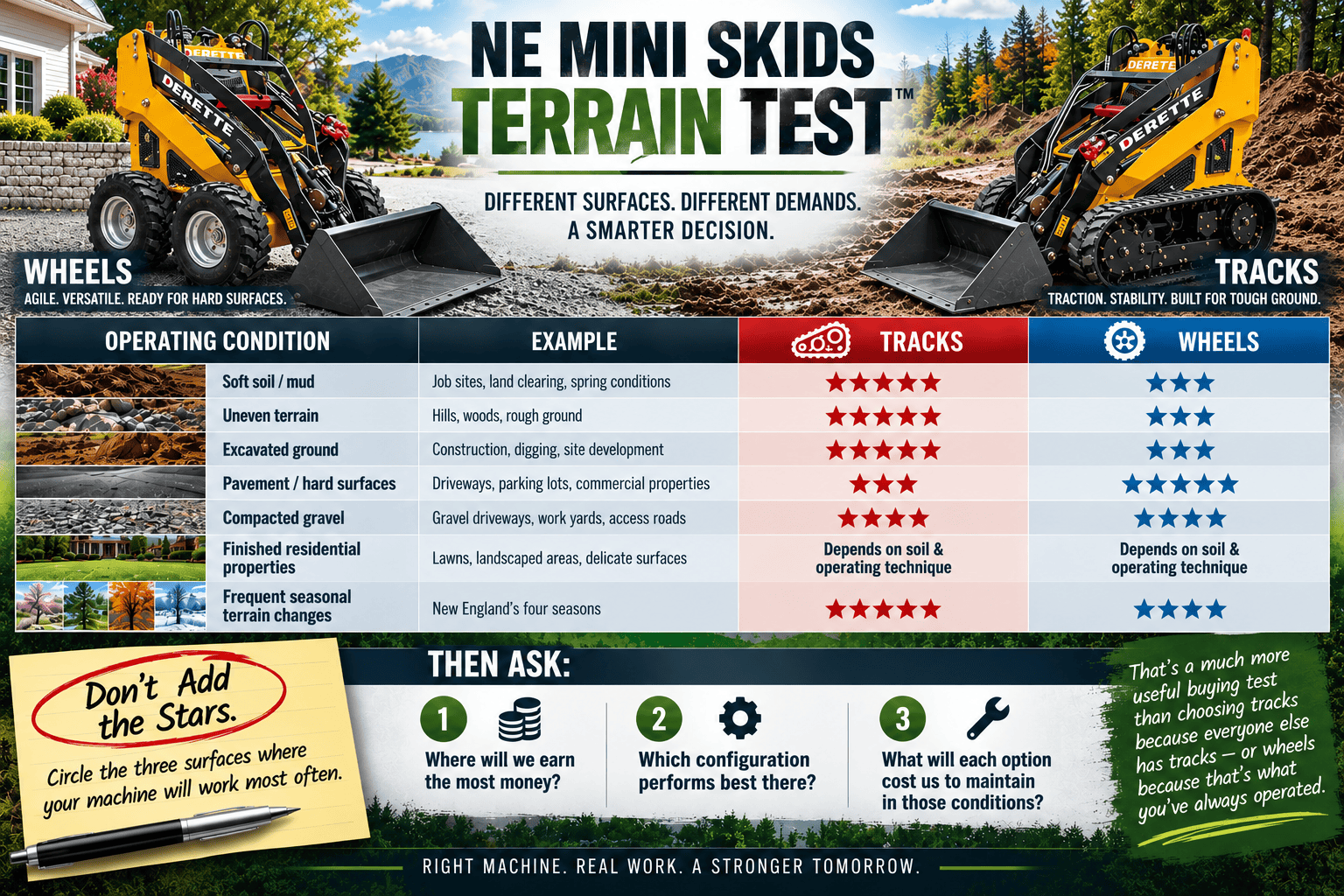
Build a Machine
6. Think Beyond Traction: Consider Ownership
The undercarriage isn't just a performance decision.
It's an ownership decision.
Before purchasing, consider:
Wear — What surfaces will accelerate wear?
Replacement — What does replacing tires or tracks involve?
Downtime — How disruptive is an undercarriage problem to your operation?
Utilization — Does one configuration allow the machine to work across more of your normal jobs?
Revenue — Will the chosen configuration allow you to tackle projects you currently perform manually or turn away?
This is the same principle we use throughout the NE Mini Skids equipment-buying framework:
Don't buy equipment around one specification. Buy around the complete workload.
That includes what is underneath the machine.
Also Read 📖The Complete Guide to Buying a Mini Skid Steer: What Every Contractor Should Know Before Investing
Tracks or Wheels? Start With the Dirt.
There isn't a universal winner.
If your work routinely involves mud, soft ground, excavation and uneven terrain, tracks may offer clear operational advantages.
If your machine spends substantial time on firm developed surfaces, pavement or compacted areas, wheels may deserve serious consideration.
And if your company works across everything from residential lawns to excavation sites to winter properties?
Then the answer requires looking at the entire annual workload.
Don't choose because someone tells you tracks are better.
Don't choose because wheels cost differently.
And don't choose because one machine looks tougher sitting on the lot.
Choose according to where the equipment will actually make money.
📞 Still deciding between tracks and wheels?
Talk with an NE Mini Skids equipment specialist about your terrain, jobsites, attachments and seasonal workload. We'll help you evaluate the machine configuration that makes sense for the work your company actually performs.
☎️Contact

Frequently Asked Questions
1. Are tracks better than wheels on a mini skid steer?
Tracks are often advantageous on soft, muddy, loose or uneven terrain because of their traction and flotation characteristics. Wheels may be better suited to other operating environments, particularly firm or hard surfaces.
2. Are tracks better for muddy jobsites?
Tracked machines are commonly chosen for muddy or soft conditions because their larger ground-contact area can provide better flotation and traction.
3. Are wheeled mini skids good on pavement?
Wheeled machines can be well suited to firm developed surfaces. Contractors should compare tire wear, traction requirements and their actual operating conditions before choosing.
4. Will tracks damage a lawn?
Tracks can still disturb turf, particularly during aggressive turns or when soil is wet. Machine weight, soil conditions and operating technique all affect turf disturbance.
5. Are tracks better for New England winters?
The answer depends on snow, ice, surface type and the specific work being performed. Contractors planning year-round use should evaluate both winter traction and hard-surface wear.
6. How do I decide between tracks and wheels?
Identify the surfaces where the machine will spend most of its working hours, then compare traction, flotation, ground disturbance, wear, maintenance and year-round utilization.


