

The Complete Mini Skid Steer Guide for New England Contractors: How to Choose, Use & Get More From Compact Equipment
NE Mini Skids Cornerstone Authority Guide | 2026
60-Second Executive Brief
A mini skid steer is more than a smaller version of traditional construction equipment. For the right contractor, it can become a compact, attachment-driven power platform capable of replacing significant amounts of manual labor while expanding the types of work a crew can perform.
The key is choosing the machine around the work.
Before buying, contractors should evaluate jobsite access, lifting requirements, hydraulic demands, terrain, transportation, attachments, expected utilization and future growth. A landscaping company working behind residential homes has very different equipment requirements from an excavation contractor moving material all day.
Mini skid steers can be especially valuable for construction, landscaping, hardscaping, excavation, utility work, property maintenance and other applications where larger equipment may be difficult or inefficient to use.
The smartest equipment decision isn't:
"What's the biggest machine I can buy?"
It's:
"Which machine, paired with the right attachments, will spend the greatest number of hours producing revenue for my business?"
Key Takeaways
🚜 Right-size the machine to the work. More capacity isn't automatically more productivity.
🚪 Access is a performance specification. A powerful machine that can't reach the work can't perform it.
🔧 Attachments determine much of the machine's value. Think about the jobs first and the attachments second—then choose the power unit.
💪 Calculate labor replacement. The real competition for a mini skid may be wheelbarrows, shovels and repetitive manual handling rather than another loader.
🌎 Terrain matters. Soil conditions, slopes, finished surfaces, mud and seasonal conditions can influence machine configuration.
🚛 Transportation is part of ownership. Machine weight, trailer capacity, tow vehicle requirements and attachment transport should be considered before purchase.
📈 Utilization drives ROI. A machine capable of working across several services and seasons has more opportunities to generate revenue.
🎯 Buy for today's workload with room for tomorrow's business.
Read More
Estimated Reading Time: 15–18 minutes
⬇️⬇️⬇️⬇️
Small Machine. Much Bigger Business Question.

There was a time when "compact equipment" could sound like a compromise.
If a contractor wanted more productivity, conventional wisdom said to buy more machine.
More horsepower.
More lift.
More weight.
More bucket.
More iron.
But construction has changed.
Labor costs matter more. Skilled employees are valuable. Residential properties are tighter. Customers expect less disruption. Contractors frequently move between multiple jobs. Attachments have become increasingly important to equipment utilization.
And suddenly, bigger isn't the only definition of productive.
Imagine a crew installing drainage behind a home.
The excavation isn't particularly large.
But between the trailer and the work are a driveway, narrow side yard, fence, established lawn, landscaping and air-conditioning equipment.
A large machine may have tremendous production capability.
It also has to get there.
That distinction is at the heart of understanding modern mini skid steers.
A mini skid isn't simply about doing less work with a smaller machine.
For many contractors, it's about mechanizing work in places where mechanization was previously difficult.
And that can completely change the economics of a job.
Also Read 📖Mini Skid Steer vs. Compact Track Loader: Which Do You Need?
1. What Can a Mini Skid Steer Actually Do?
The easiest mistake is thinking of a mini skid as a bucket with an engine.
The better way to think about it is:
Power Unit + Hydraulic System + Attachment = Work Capability
Change the attachment and you can change the job.
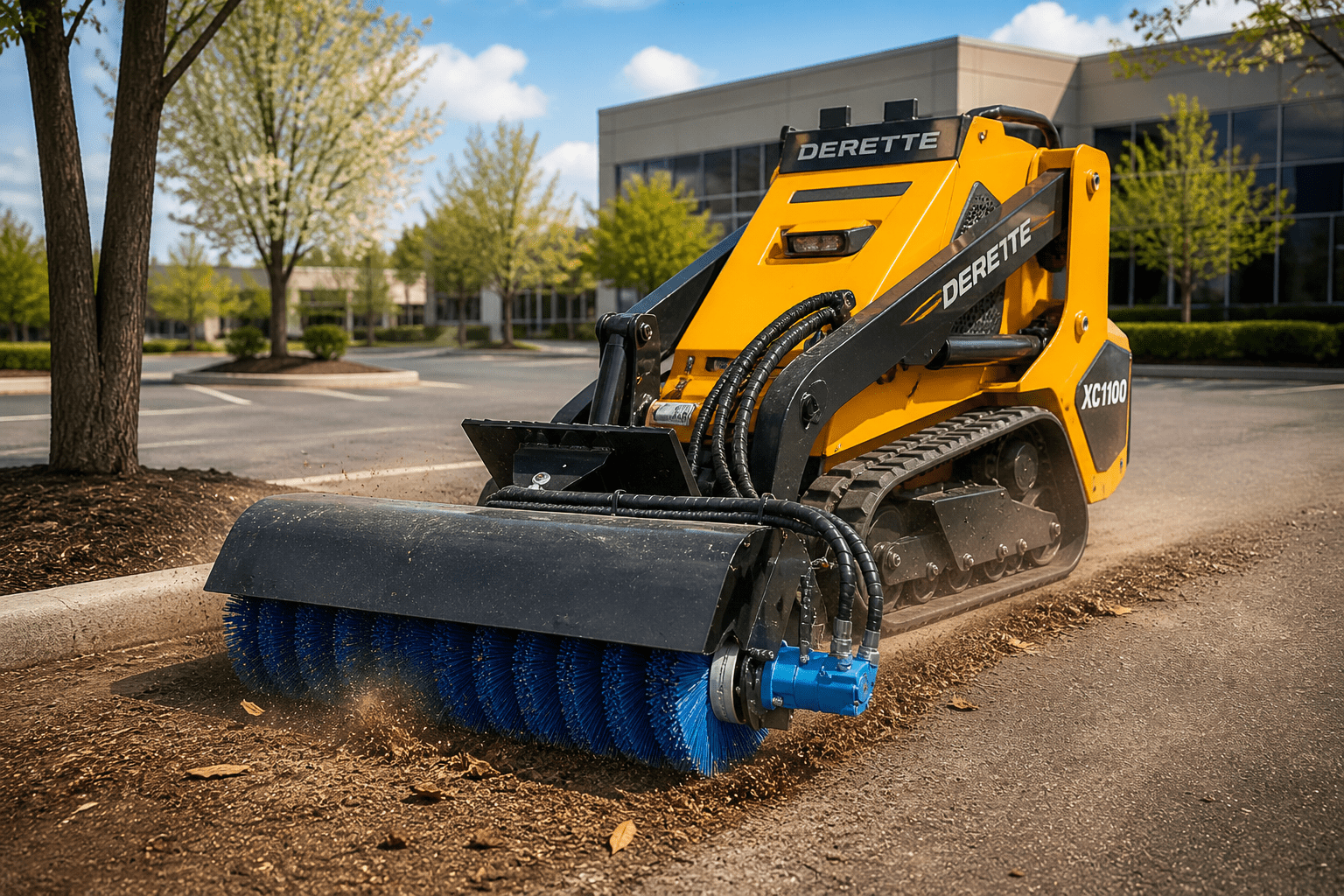
Depending on the machine and attachment compatibility, compact loaders can support applications involving:
- Excavation
- Material movement
- Grading
- Site preparation
- Trenching
- Augering
- Pallet handling
- Brush handling
- Property cleanup
- Landscaping
- Hardscaping
- Utility installation
- Drainage
- Fence construction
- Seasonal property work
That means the value of the machine isn't defined by one application.
It is defined by the number of productive applications the business can realistically put through it.
This is the foundation of what we call the:
Attachment Multiplier™
ONE POWER UNIT × MULTIPLE ATTACHMENTS = MULTIPLE REVENUE OPPORTUNITIES
That doesn't mean every contractor should purchase every available attachment.
Quite the opposite.
The goal is to identify attachments that correspond with work the company already performs—or work it can realistically sell.
Also Read 📖How Mini Skid Steers Are Transforming Construction & Site Development Across New England
2. Where Mini Skids Make the Biggest Difference: Access
One of the most valuable mini-skid specifications doesn't appear in a horsepower comparison.
Width.
Consider where contractors actually work:
🏡 Behind houses
🚪 Through gates
🌳 Between landscaping
🧱 Beside patios
🏚️ Around existing structures
🐴 Inside and around barns
🚧 Along utility corridors
🌿 Across developed properties
A compact footprint can allow equipment to reach areas where larger machines may create logistical challenges.
And this matters financially.
If getting a large machine into a backyard requires removing fencing, disturbing landscaping or creating a larger access path, those activities become part of the project's real equipment cost.
There is also restoration.
The crew may complete the excavation quickly—and then spend hours repairing the damage caused simply by reaching it.
A Better Productivity Formula
Don't measure only:
How fast did we dig?
Measure:
ACCESS + WORK + CLEANUP + RESTORATION + LABOR
Now you're measuring the whole job.
Also Read 📖Are Oversized Machines Costing Contractors More on Small Jobsites?
3. The Wheelbarrow Problem
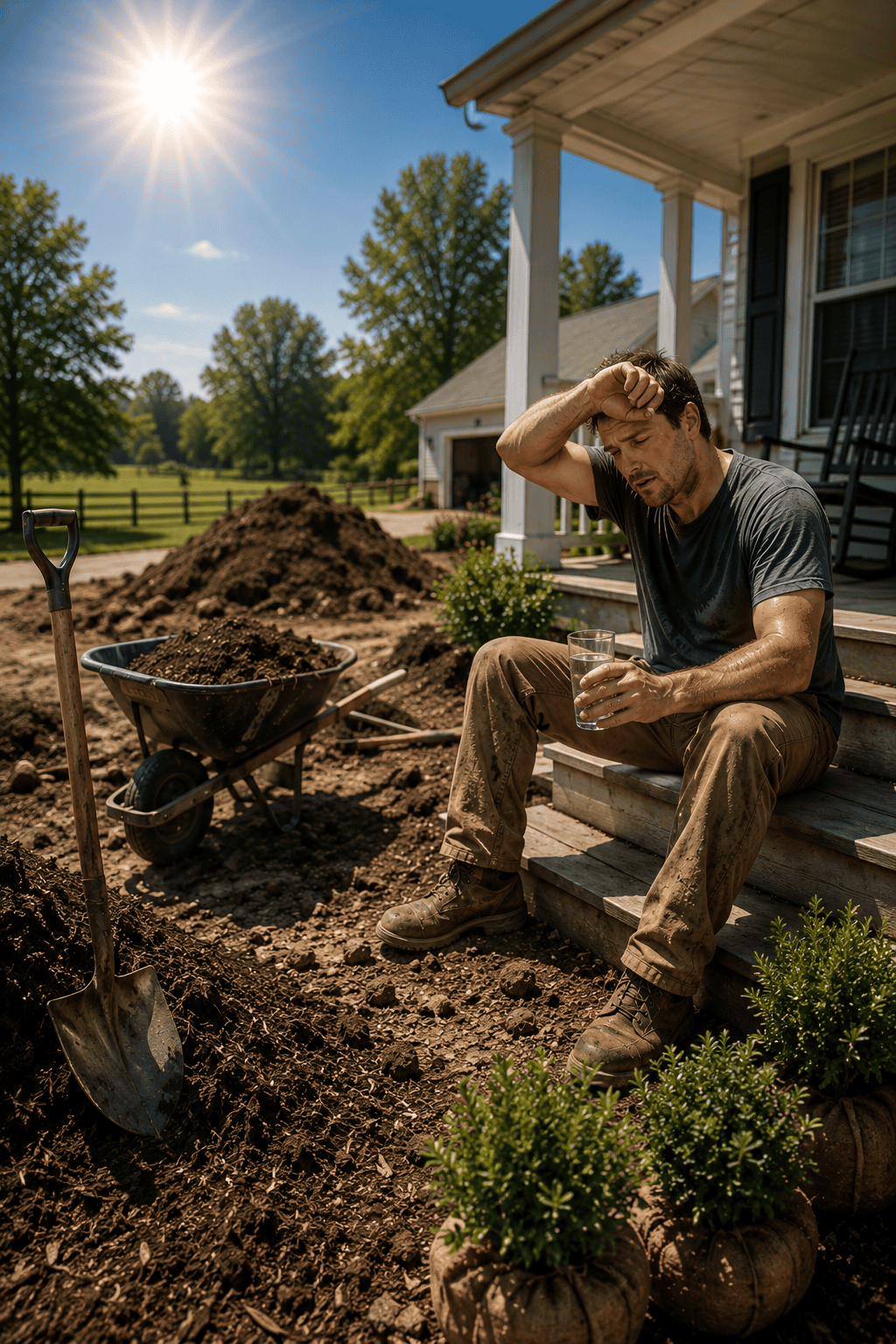
Here's where mini skid economics become particularly interesting.
A mini skid doesn't always replace another piece of equipment.
Sometimes it replaces this:
SHOVEL → WHEELBARROW → WALK → DUMP → RETURN → REPEAT
Think about a crew moving aggregate into a backyard.
One wheelbarrow trip doesn't seem significant.
Neither does ten.
But multiply repetitive material handling across employees, projects, weeks and an entire season.
Now you're measuring hundreds of labor hours.
Those employees could instead be performing skilled work.
So when evaluating compact equipment, ask:
How many employee-hours are currently spent moving material rather than producing finished work?
That's a much more useful question than simply comparing purchase prices.
Also Read 📖How Contractors Are Solving Labor Shortages with Compact Equipment in Maine
4. Mini Skids in Construction & Site Development

Construction sites aren't always wide-open spaces.
Residential additions, decks, foundations, utility connections, site preparation and renovation projects frequently happen around existing structures.
That's where compact equipment can complement larger machines.
Mini skids may assist crews with:
- Site cleanup
- Material handling
- Small excavation
- Backfilling
- Grading
- Utility trenches
- Moving aggregate
- Auger work
- Demolition cleanup
The value isn't necessarily replacing every larger machine onsite.
It can be putting mechanized productivity exactly where it's needed.
Go Deeper
Read: How Mini Skid Steers Are Transforming Construction & Site Development Across New England
This supporting article should internally link here, and this pillar should link back to it.
Also Read 📖How Mini Skid Steers Are Transforming Construction & Site Development Across New England
5. Excavation & Earthmoving: When Compact Becomes an Advantage
Earthmoving naturally makes people think of large equipment.
And for high-volume excavation, larger equipment is often exactly what is required.
But not every excavation is large.
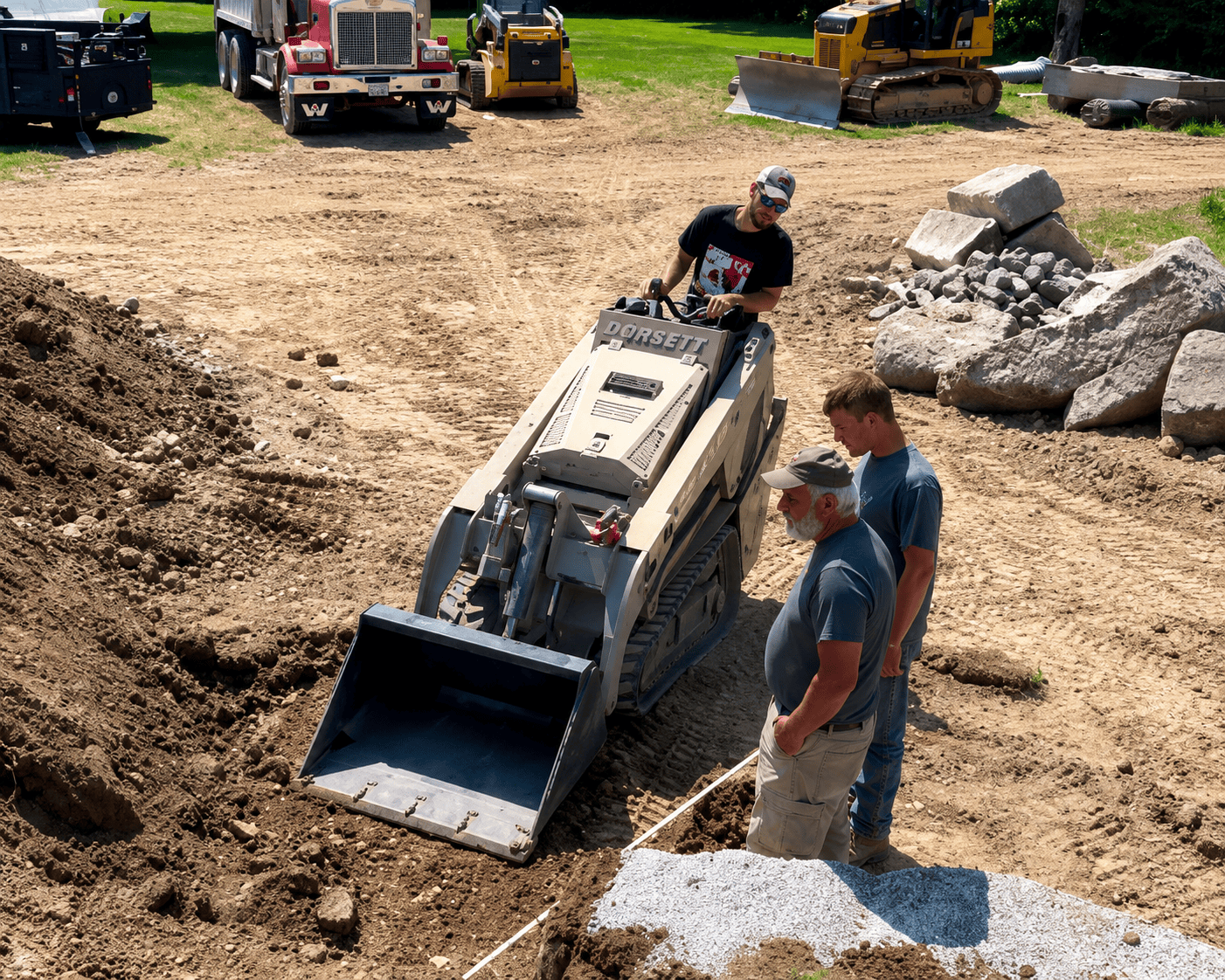
Consider:
💧 Drainage
🚧 Utility trenches
🏡 Residential projects
🕳️ Small foundations
🌳 Landscape excavation
🧱 Hardscape preparation
🏊 Backyard projects
In these environments, precision and access can compete with raw production capacity.
A mini skid may allow the contractor to excavate closer to structures and operate in areas where larger equipment would require additional planning or site disruption.
The important distinction is scale.
If your normal workload requires moving huge quantities of earth, undersizing equipment creates inefficiency.
If your normal workload involves smaller excavations scattered across developed properties, oversized equipment can create a different kind of inefficiency.
Go Deeper
Also Read 📖Why Compact Mini Skid Steers Are Becoming the Smart Choice for Excavation and Earthmoving Projects
6. Landscaping & Hardscaping: Where Compact Equipment Shines
Few industries illustrate the mini skid concept better than landscaping.
Landscapers routinely encounter the exact conditions compact equipment is designed to address:
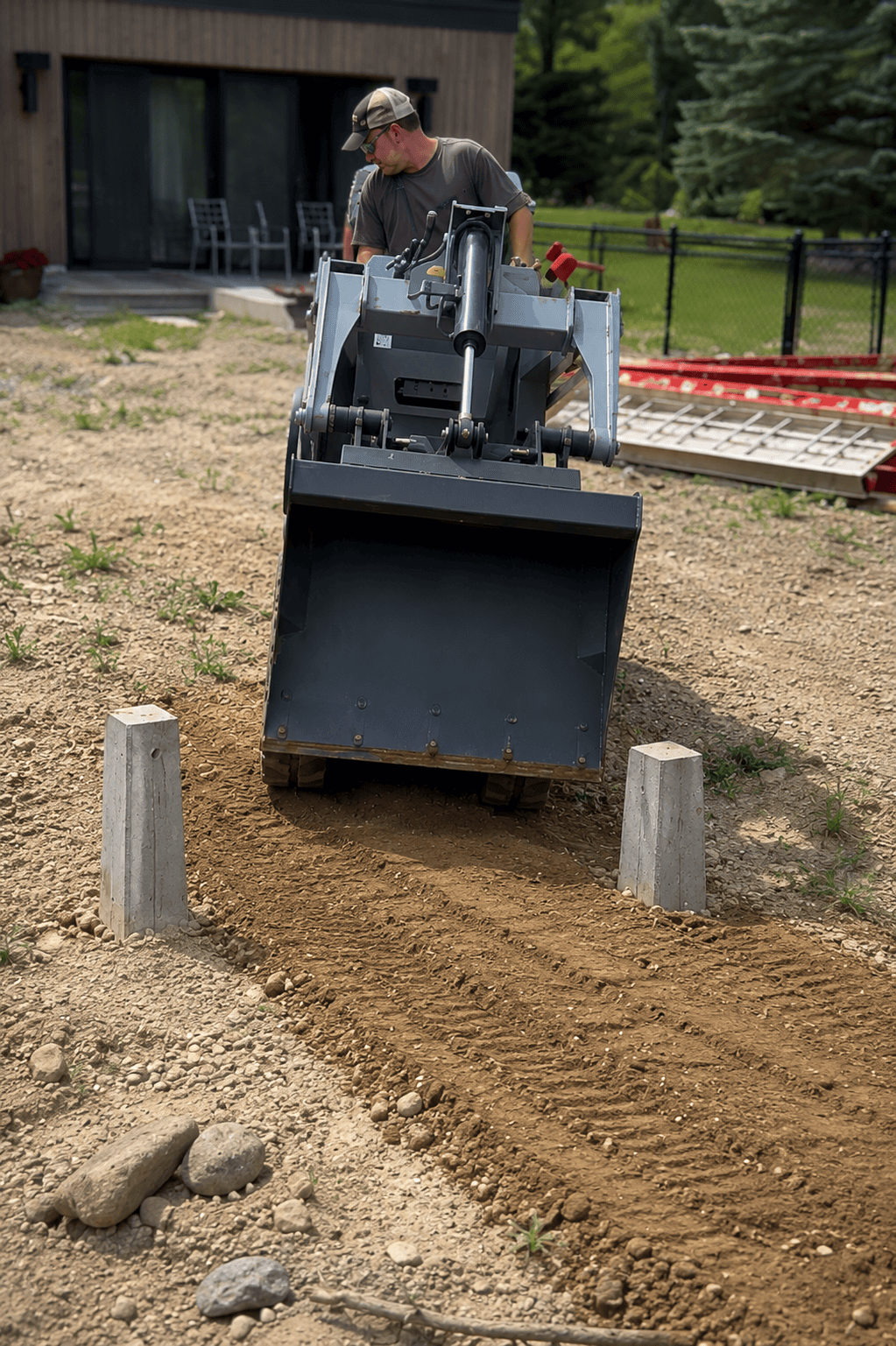
- Backyard access
- Existing lawns
- Gates
- Walkways
- Finished properties
- Gardens
- Trees
- Residential structures
At the same time, landscaping requires enormous amounts of material movement.
Soil.
Mulch.
Stone.
Aggregate.
Pavers.
Plants.
Debris.
For decades, much of that work depended heavily on wheelbarrows and manual handling.
Compact mechanization changes the workflow.
A mini skid paired with the right attachments can assist with material movement, grading, excavation, augering, pallet handling and site preparation while maintaining a footprint appropriate for many residential properties.
And because hardscape materials can be heavy, reducing manual handling can be especially valuable.
Go Deeper
Also Read 📖What is the best mini skid steer for landscaping and hardscaping?
7. Property Maintenance & Land Management
A machine earns its keep when it works.
That makes utilization one of the most important—and frequently overlooked—parts of equipment ownership.
Property maintenance can extend mini-skid usefulness beyond traditional construction applications.
Depending on the machine, property and attachments, compact equipment can support:

🌲 Brush management
🪵 Material movement
🌿 Property cleanup
🕳️ Post-hole work
🐴 Barn chores
🪨 Gravel maintenance
🚧 Fence projects
❄️ Seasonal work
This matters because equipment sitting in the yard doesn't generate revenue.
A contractor able to use one machine across construction, landscaping, excavation and property maintenance may have substantially more opportunities to put that asset to work.
Go Deeper
Also Read📖: Is a Mini Skid Steer Good for Property Maintenance and Land Management?
8. Tracks vs. Wheels: Terrain Changes the Decision

There isn't one universally correct undercarriage for every application.
Terrain matters.
So do surface conditions and operating priorities.
Contractors should consider:
- Mud
- Soft soil
- Finished lawns
- Gravel
- Pavement
- Uneven terrain
- Slopes
- Snow
- Seasonal ground conditions
- Frequency of hard-surface operation
Tracks can offer advantages where traction, flotation and uneven terrain are priorities.
Wheels can make sense in other operating environments, particularly when hard surfaces, maneuverability and different ownership considerations are involved.
The important lesson isn't that one automatically wins.
It's this:
Choose the undercarriage for the surfaces where the machine will actually earn its money.
This also gives us a strong future supporting article:
Tracks vs. Wheels: Which Mini Skid Steer Is Better for Your Work?
Also Read 📖 The Complete Guide to Buying a Mini Skid Steer: What Every Contractor Should Know Before Investing
9. Attachments: Choose the Work Before the Tool
Let's reverse the normal buying process.
Instead of asking:
"What attachments can I buy for this machine?"
Ask:
"What work does my company need equipment to perform?"
Write down the top five.
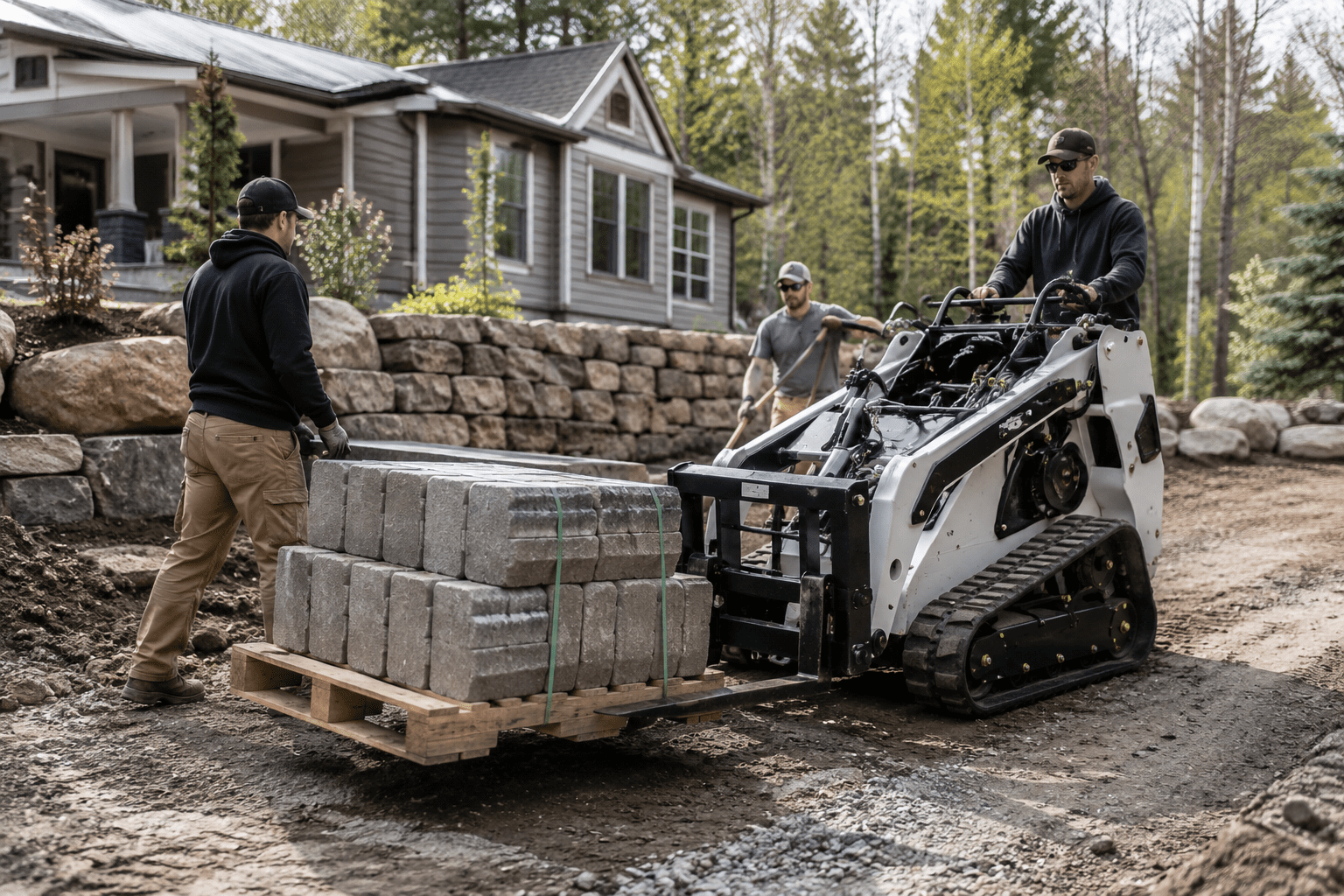
For example, a landscaping company might identify:
- Move soil and aggregate
- Transport pallets of material
- Drill holes
- Prepare grades
- Remove brush
Now translate those into attachments.
Only after that should you evaluate the machine required to operate them effectively.
This sequence matters because attachments have their own:
- Hydraulic requirements
- Weight considerations
- Compatibility requirements
- Operating characteristics
The machine and attachment have to function as a system.
The Attachment-First Buying Method™
STEP 1 — Identify the work
↓
STEP 2 — Identify the attachment
↓
STEP 3 — Determine attachment requirements
↓
STEP 4 — Choose the appropriate machine
That prevents buying a loader first and discovering afterward that the contractor's most important attachment isn't an ideal match.
Also Read 📖 Mini Skid Steer Attachments That Deliver the Highest Productivity Gains for Contractors
Attachments
10. How Much Mini Skid Do You Really Need?
This is where buyers can get themselves into trouble.
Buying too little machine creates frustration.
Buying too much can create unnecessary cost and transportation requirements.
So we need to right-size.
Start with:
Lift Requirements
What are you actually lifting?
Not theoretically.
What materials and loads appear on your real jobsites?
Hydraulic Requirements
Which attachments will you operate, and what do they require?
Access Requirements
What is the narrowest environment the machine routinely needs to enter?
Transportation
What truck and trailer will move the machine and its attachments?
Terrain
Where will the machine spend most of its operating hours?
Utilization
How many services can realistically use it?
Growth
What work is the business likely to add over the next several years?
This leads us to an important buying principle:
Buy enough machine to comfortably perform your normal workload—with reasonable capacity for growth.
11. Mini Skid Steer vs. Compact Track Loader
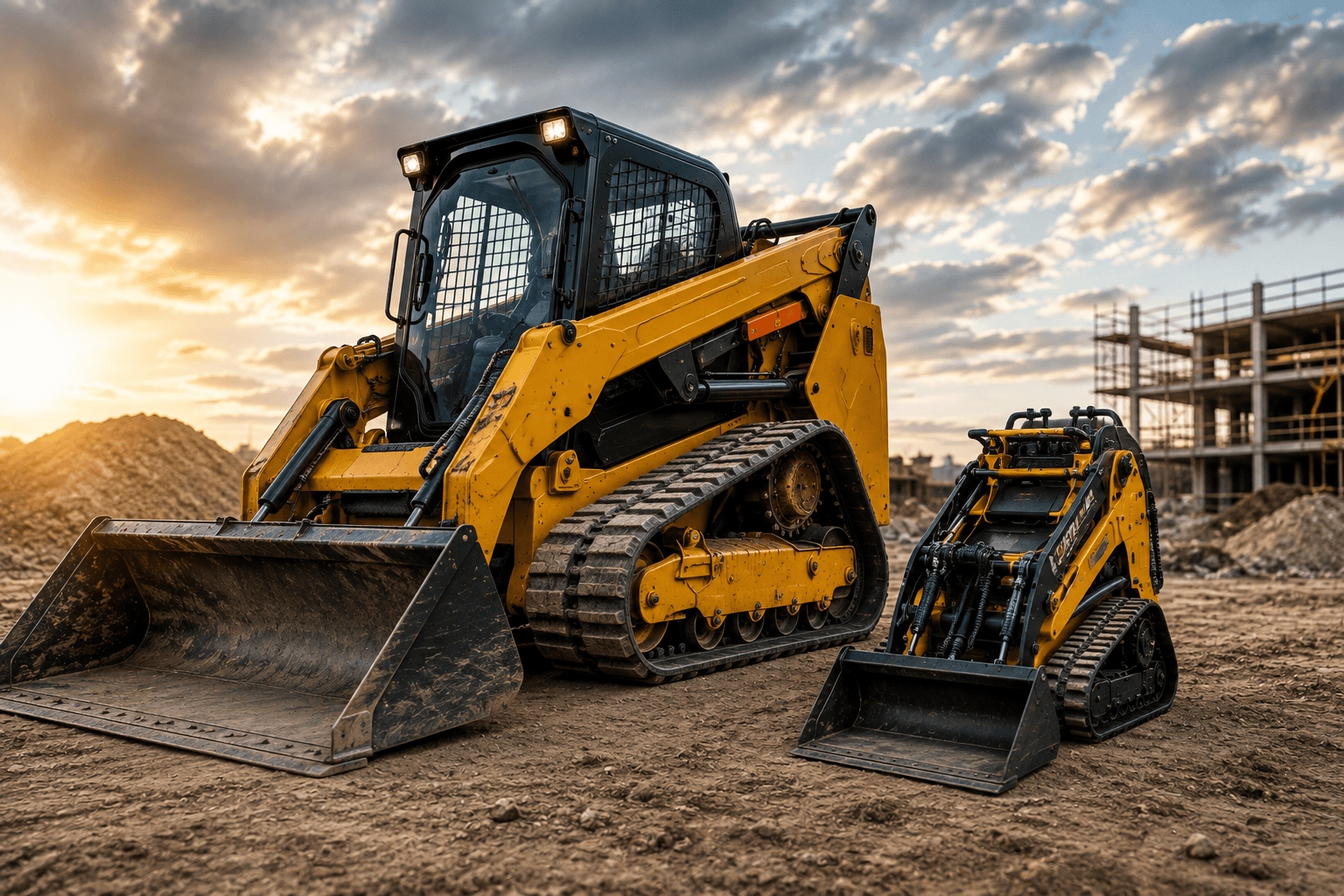
This is where the "bigger must be better" assumption needs some nuance.
A compact track loader can provide greater capacity and production.
If you're performing heavy excavation, loading large volumes of material or routinely handling demanding loads, that capacity can be exactly what the business needs.
But if your jobs involve:
🚪 Restricted access
🏡 Residential properties
🌿 Established landscaping
🚛 Frequent mobilization
💪 Replacing manual material handling
then a mini skid can solve a different set of operational problems.
Don't compare the machines only by asking which is stronger.
Compare them by asking:
Which one fits the revenue-producing work we perform most frequently?
Go Deeper
Also Read📖 Mini Skid Steer vs. Compact Track Loader: Which Machine Does Your Business Actually Need?
12. The NE Mini Skids Decision Framework™

Build a Machine
13. Which NE Mini Skid Is Right for You?
Once the workload has been defined, model selection becomes much easier.
NE Mini Skids offers multiple machine platforms to address different operating needs.
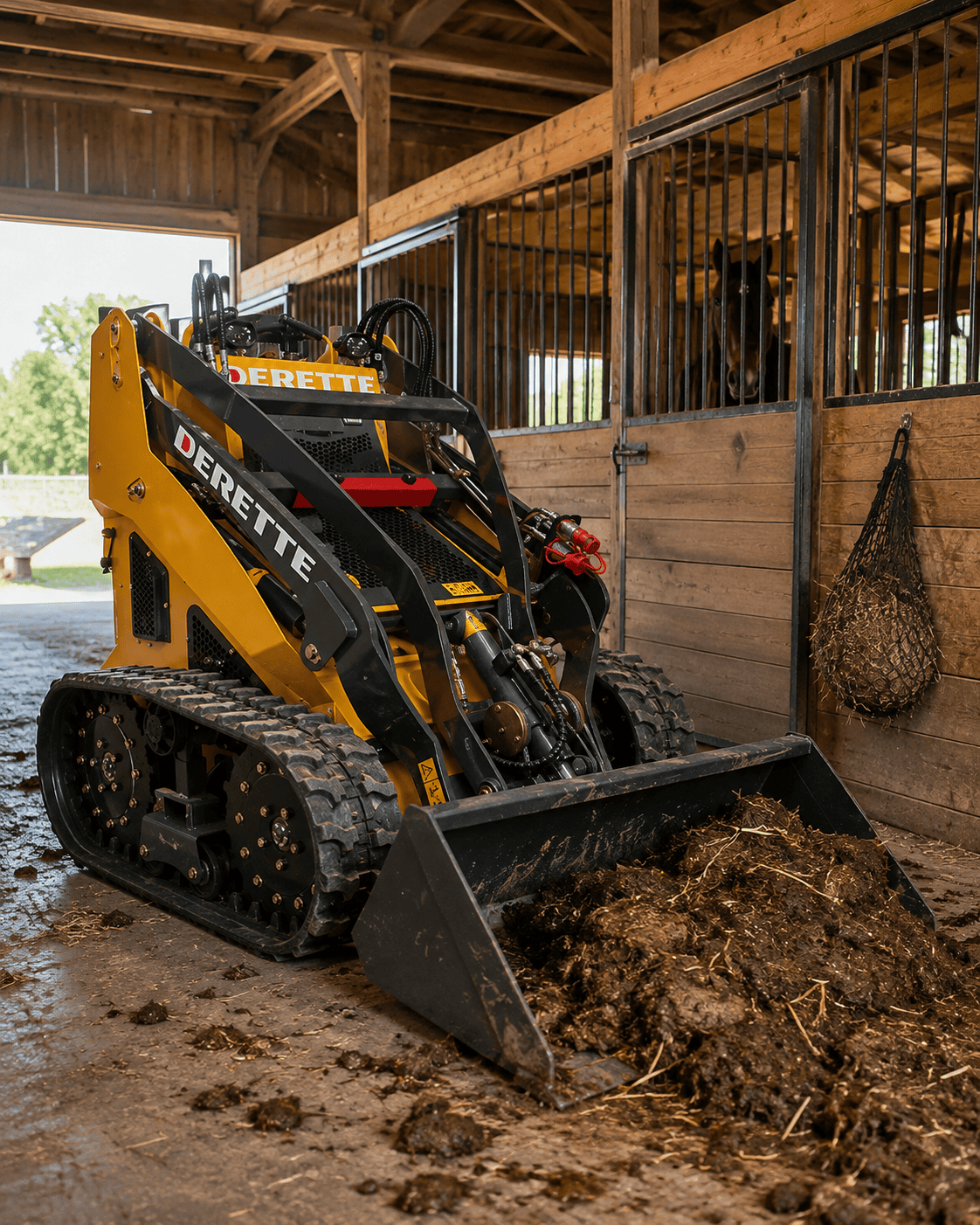
DRT 450T
A compact option for applications where maneuverability, accessibility and lighter-duty versatility are priorities.
Think: compact access and everyday property work.
DRT 480i
A versatile platform suited to residential construction, landscaping, hardscaping and other compact-access applications.
Think: the contractor who needs one machine to handle multiple types of work.
V1000
A step toward greater capability for contractors performing more demanding excavation, drainage, utility, septic and construction applications.
Think: increased workload and digging requirements.
XC1100
Designed for businesses requiring greater capability for demanding material handling, construction and commercial applications.
Think: greater capacity for contractors whose normal workload requires it.
But remember:
Don't start with DRT 450T vs. DRT 480i vs. V1000 vs. XC1100.
Start with:
What do you need the machine to accomplish?
Then choose the model.
14. The Real Cost of Ownership Isn't the Purchase Price

Here's where equipment economics get interesting.
Suppose Machine A costs less.
But Machine B allows the company to:
- Eliminate more manual labor
- Complete jobs faster
- Accept additional work
- Use more profitable attachments
- Work across more seasons
- Reduce restoration
- Mobilize more efficiently
Which machine is actually cheaper?
Equipment ROI should consider:
Acquisition Cost
What did the machine and necessary attachments cost?
Operating Cost
Fuel, maintenance, wear items and routine ownership expenses.
Labor Displacement
How many manual hours can equipment replace?
Productivity Gain
Can crews complete more work per day?
Utilization
How many billable hours can the machine realistically accumulate?
Revenue Expansion
Does equipment allow the company to sell services it previously declined?
That's the calculation contractors should care about.
Not:
"How much does it cost?"
But:
"What does it cost relative to what it can produce?"
Financing
15. Seven Expensive Mini Skid Buying Mistakes

Build the Machine Around the Business
The mini skid steer has earned its place on modern jobsites not because it is the biggest piece of equipment available.
It has earned it because compact equipment can solve problems that size alone cannot.
It can bring mechanized power into restricted areas.
It can replace repetitive manual labor.
It can operate multiple attachments.
It can move between different applications.
And for the right contractor, it can turn one compact power unit into an equipment platform capable of producing revenue across multiple services.
But none of that means every contractor needs the same machine.
That's why the smartest equipment purchase doesn't begin on a specification sheet.
It begins with your business.
Where do you work?
What do your crews do every day?
What slows them down?
What do they move?
What can't they currently reach?
Which attachments could replace manual work?
Where do you want the company to go next?
Answer those questions first.
Then choose the machine.
Machines

Need Help Building the Right Mini Skid Setup?
You don't have to figure out machine size, attachments, hydraulics and job-fit from a chart alone.
Talk with an NE Mini Skids equipment specialist about the work your company actually performs.
Tell us about your jobsites.
Tell us what you're moving.
Tell us where your crews are still using wheelbarrows and shovels.
Tell us which services you want to add.
Then we can help determine which machine and attachment combination makes sense for the way your business works.
📞 Talk with NE Mini Skids before you buy more machine—or less machine—than you actually need.
☎️Contact

Frequently Asked Questions
1. What is a mini skid steer used for?
Mini skid steers can perform material handling, excavation, grading, trenching, augering, landscaping, hardscaping, construction, utility and property-maintenance work depending on the machine and attachments.
2. Are mini skid steers good for contractors?
They can be particularly useful for contractors who need compact access, multiple attachments, frequent transportation and a way to reduce repetitive manual labor.
3. Can a mini skid steer replace a full-size skid steer or CTL?
Not in every application. Larger machines generally provide advantages for heavy lifting and high-volume production. Mini skids are particularly valuable where access, maneuverability and compact operation matter.
4. Are tracks or wheels better on a mini skid steer?
It depends on terrain, surface conditions and operating priorities. Contractors should evaluate where the machine will spend most of its working hours before choosing.
5. What attachments can a mini skid steer use?
Depending on machine compatibility, attachments may include buckets, pallet forks, augers, trenchers, grapples, brush-management tools and other hydraulic or non-hydraulic implements.
6. How do I choose the right mini skid steer?
Start with workload, access, lift requirements, attachment needs, hydraulic requirements, terrain, transportation, utilization and expected growth.
7. Is a mini skid steer good for excavation?
Mini skids can be effective for many residential, utility, landscaping, drainage and smaller excavation applications. Larger high-volume excavation may require larger equipment.
8. Are mini skid steers useful for landscaping?
Yes. Their compact dimensions and attachment versatility can make them particularly useful for material movement, grading, site preparation, augering and other landscape and hardscape tasks.
9. Can a mini skid steer reduce labor costs?
It can reduce the amount of repetitive manual digging, hauling, lifting and wheelbarrow work required for many projects, although actual savings depend on the operation and workload.
10. How do I know which NE Mini Skids model I need?
Define your typical jobs, access restrictions, lifting requirements, desired attachments, terrain and transportation setup first. An NE Mini Skids equipment specialist can then help match those requirements to an appropriate model.
Read Previous article: Mini Skid Steer vs. Compact Track Loader: Which Do You Need?
Check out a Mini-skid with a trencher in this video!


