

Excavation Has Entered a New Era
For decades, excavation meant bringing the biggest machine possible to every jobsite.
Bulldozers.
Large excavators.
Full-size skid steers.
Backhoes.
Dump trucks.
These machines remain essential for highways, commercial developments, and large infrastructure projects, but today's excavation work is changing.
Instead of clearing open fields, contractors are increasingly working on projects surrounded by finished landscapes, existing homes, underground utilities, and confined access points.
The goal is no longer simply moving dirt.
The goal is moving dirt efficiently, accurately, and with as little disruption as possible.
That shift has created tremendous demand for compact tracked mini skid steers.
Also read 📖How Mini Skid Steers Are Transforming Construction & Site Development Across New England
Why Bigger Equipment Isn't Always Better
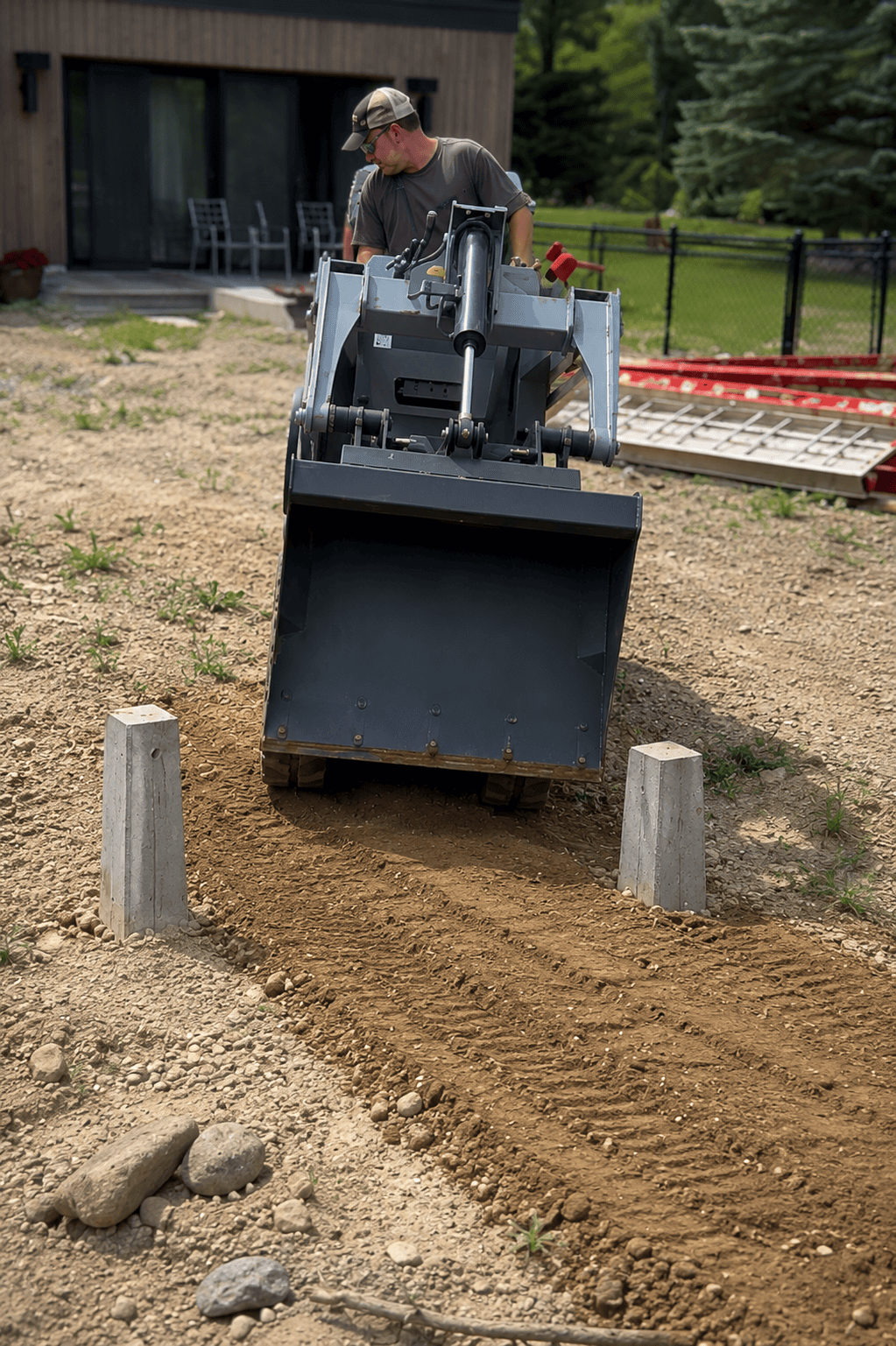
Many excavation contractors once believed larger equipment automatically meant higher productivity.
On some projects, that's still true.
But modern excavation frequently takes place where space is limited.
Examples include:
- Residential backyards
- Between existing homes
- Around commercial buildings
- Beside swimming pools
- Along retaining walls
- Inside fenced properties
- Around septic systems
- Near mature trees
Bringing oversized equipment into these environments often creates unnecessary problems.
Large machines may:
- Damage lawns
- Crush landscaping
- Leave deep ruts
- Require fence removal
- Limit visibility
- Increase restoration costs
Compact mini skid steers solve many of these challenges while still providing impressive lifting power and hydraulic performance.
For many contractors, they're the perfect complement to larger excavation equipment.
Also read 📖Are Oversized Machines Costing Contractors More on Small Jobsites?
Modern Excavation Demands Precision
Today's customers expect contractors to leave their property looking as good—or better—than when the project began.
That means excavation is no longer judged solely by how quickly dirt is moved.
It's judged by:
- Finished appearance
- Property protection
- Jobsite cleanliness
- Safety
- Accuracy
- Efficiency
A compact tracked mini skid steer allows operators to work closer to structures, navigate narrow pathways, and transport material with remarkable precision.
This is especially valuable on:
- Foundation repairs
- Drainage corrections
- Utility replacements
- Septic installations
- Landscape renovations
The ability to work accurately in confined spaces has become one of the biggest advantages of compact equipment.
The Hidden Cost of Manual Labor

Many excavation companies underestimate how much time is spent simply moving material.
Think about a typical residential excavation project.
Crew members repeatedly transport:
- Gravel
- Topsoil
- Drainage stone
- Pipe
- Sand
- Fill
- Concrete
- Demolition debris
Without compact equipment, much of this work is completed using:
- Wheelbarrows
- Shovels
- Hand carts
- Manual lifting
Not only is this physically demanding, but it also limits productivity.
Workers become fatigued.
Material takes longer to move.
Projects stretch into additional days.
A mini skid steer changes that equation dramatically.
One operator can transport heavy materials quickly and consistently while allowing the rest of the crew to focus on skilled installation.
Also Read 📖How Contractors Are Solving Labor Shortages with Compact Equipment in Maine
The Jobs Compact Mini Skid Steers Handle Best
Build a Machine
Mini skid steers have become indispensable on a wide variety of excavation projects.
Residential Site Preparation
Preparing residential lots often involves:
- Removing vegetation
- Rough grading
- Transporting fill
- Cleaning debris
- Leveling building pads
Their compact size allows contractors to complete these tasks with minimal disruption to surrounding property.
480i
Foundation Excavation
Foundation contractors frequently rely on compact equipment for:
- Moving stone
- Backfilling walls
- Cleaning excavation spoils
- Fine grading around foundations
- Material handling
Working close to structures requires excellent visibility and precise control—two areas where mini skid steers excel.
V1000
Drainage Projects
Proper drainage protects homes, businesses, and landscapes from costly water damage.
Compact loaders simplify:
- French drains
- Curtain drains
- Dry wells
- Swales
- Catch basin installations
With the right attachments, contractors can move seamlessly from excavation to backfilling and final grading.
V1000
Utility Installation
Installing underground utilities requires careful excavation and efficient material handling.
Mini skid steers are commonly used for:
- Water services
- Sewer laterals
- Electrical conduit
- Fiber optic lines
- Landscape lighting
- Irrigation systems
Because they're compact, they often reduce restoration work after utilities have been installed.
V1000
Retaining Wall Construction
Retaining walls involve much more than stacking blocks.
Contractors must:
- Excavate
- Move base material
- Transport retaining wall blocks
- Backfill
- Grade
- Clean the finished site
A compact tracked loader helps streamline every phase of the project.
XC1100
Access Is Often the Difference Between Winning and Losing a Job
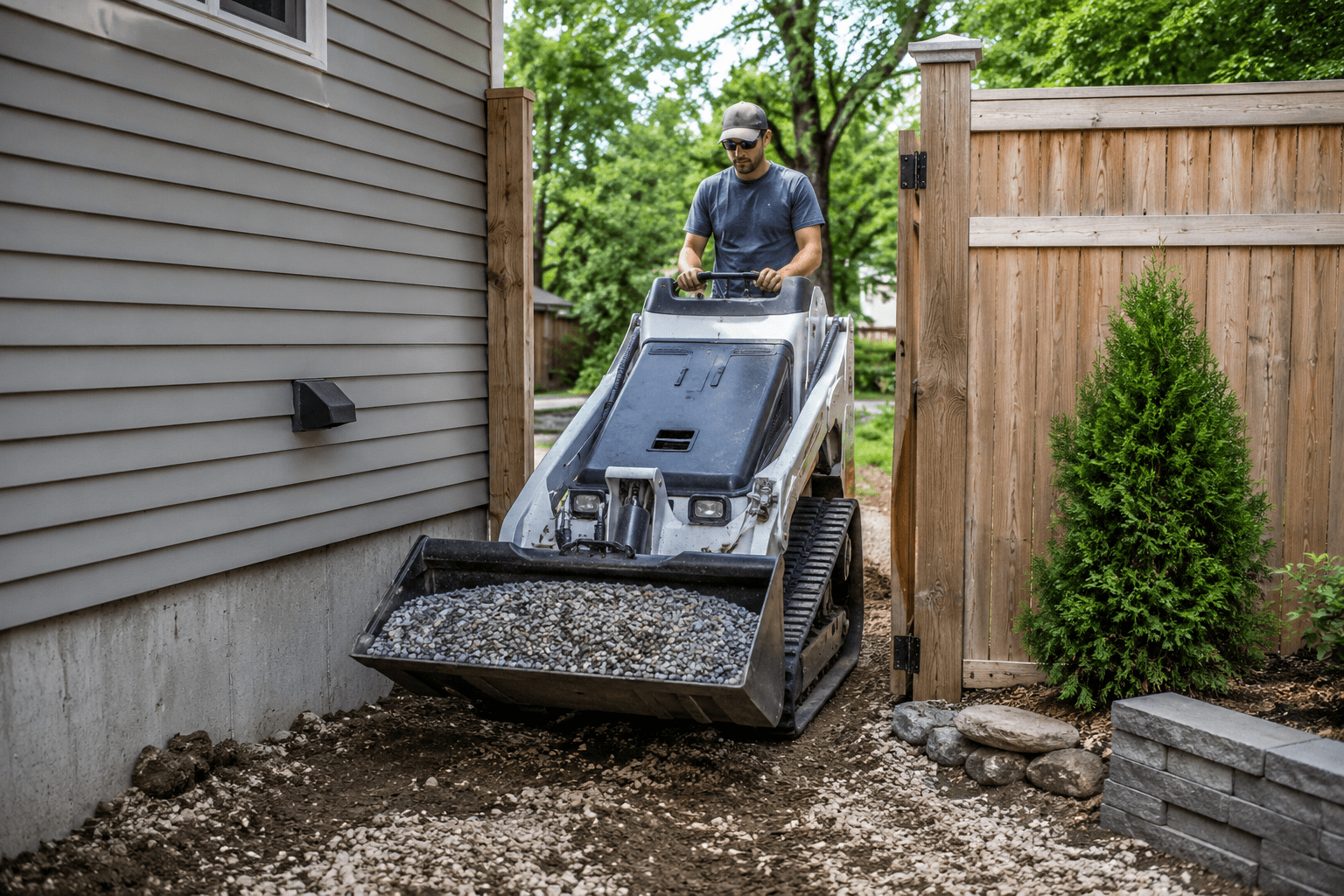
Many excavation projects are never limited by digging capability.
They're limited by access.
Can equipment reach the work area?
Can it fit through the gate?
Will it damage landscaping?
Can it maneuver around existing structures?
Mini skid steers answer "yes" to many of these questions.
Their narrow footprint allows contractors to reach places larger equipment simply cannot.
This opens opportunities such as:
- Backyard drainage corrections
- Tight-access septic systems
- Pool excavations
- Foundation waterproofing
- Utility repairs
- Landscape renovations
For many contractors, the ability to access difficult jobsites translates directly into additional business.
Also Read📖Why Tight-Access Projects Are Growing Across New England and What Contractors Need to Know
Material Handling Is Where Productivity Really Increases
Digging may be the most visible part of excavation, but transporting materials often consumes just as much time.
Throughout a typical workday, contractors move:
- Stone
- Pipe
- Concrete
- Gravel
- Fill
- Sand
- Demolition debris
- Landscaping materials
Replacing wheelbarrows with a compact tracked loader dramatically increases efficiency while reducing worker fatigue.
Over the course of a busy construction season, those time savings can translate into additional completed projects and increased profitability.
Looking Ahead: Attachments Unlock Even More Capability
The compact loader itself is only the beginning.
What truly transforms excavation productivity is the wide range of hydraulic attachments available.
Buckets.
Trenchers.
Augers.
Grapples.
Soil conditioners.
Each attachment expands the machine's capabilities, allowing contractors to tackle more services without investing in multiple specialized machines.
Attachments
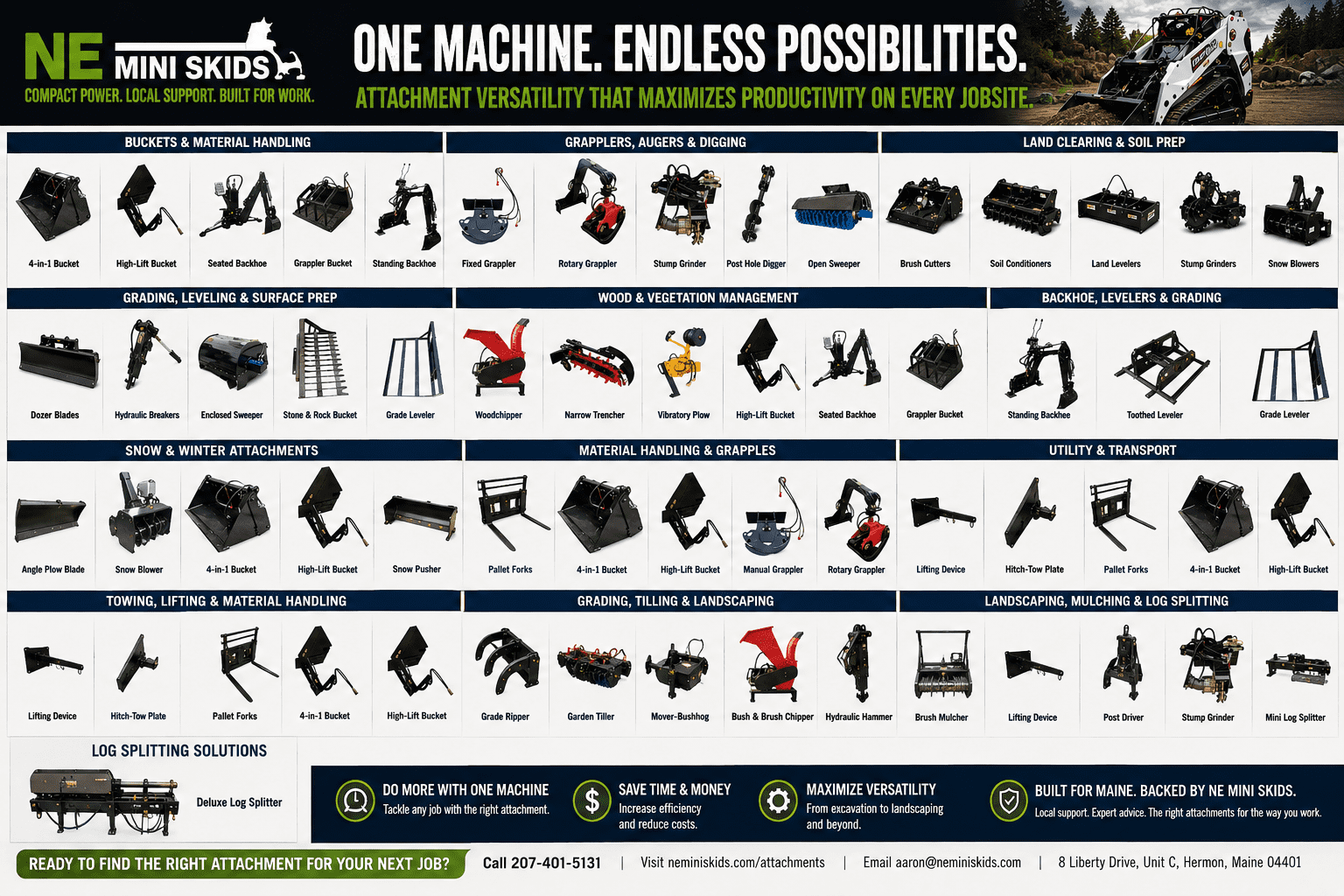
The Right Attachments Make Excavation Faster, Safer, and More Profitable
The true strength of a compact mini skid steer isn't just its size—it's what the machine can become with the right attachment.
Instead of owning multiple specialized machines, excavation contractors can quickly switch attachments and move from one phase of a project to the next.
That flexibility saves time, reduces transportation costs, and keeps projects moving without unnecessary downtime.
For many contractors, attachments are what transform a compact loader into one of the most productive machines on the jobsite.
Also Read 📖Mini Skid Steer Attachments That Deliver the Highest Productivity Gains for Contractors
Bucket: The Foundation of Every Earthmoving Project
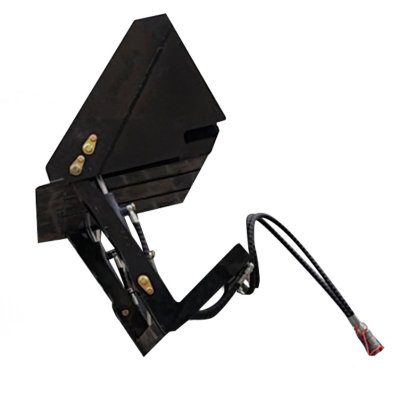
The general-purpose bucket is the attachment every excavation contractor depends on.
Whether you're preparing a building pad or cleaning up after utility work, the bucket handles dozens of daily tasks.
Common uses include:
- Digging loose material
- Loading dump trailers
- Moving gravel
- Transporting topsoil
- Backfilling foundations
- Hauling sand
- Site cleanup
- Removing demolition debris
No matter the project, the bucket remains the attachment that spends the most time on the machine.
Trenchers Make Utility Installation Faster
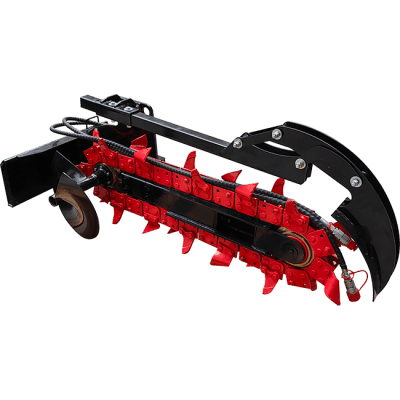
Underground utilities continue to be one of the fastest-growing excavation services.
Instead of digging narrow trenches by hand, contractors can install a trencher attachment and dramatically increase productivity.
Perfect for installing:
- Water services
- Drain tile
- Electrical conduit
- Fiber optic cable
- Irrigation systems
- Landscape lighting
- Gas lines
- Low-voltage wiring
Precise trench widths also reduce restoration costs after installation is complete.
Augers Deliver Precision Every Time
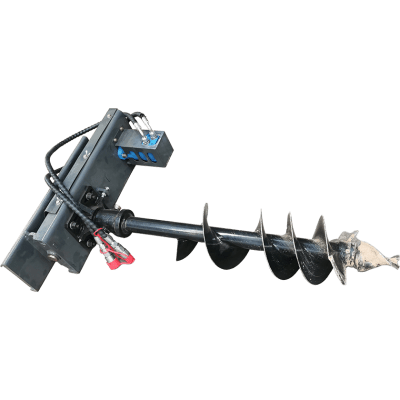
Many excavation projects require drilled holes rather than open trenches.
An auger attachment provides fast, consistent results for:
- Fence installations
- Deck footings
- Pole buildings
- Utility poles
- Tree planting
- Sign foundations
- Foundation piers
Instead of relying on manual digging, contractors can complete multiple holes in a fraction of the time.
Grapples Simplify Demolition Cleanup

Excavation rarely ends when the digging is complete.
Cleaning the site is equally important.
A grapple attachment allows contractors to safely move:
- Tree stumps
- Brush
- Concrete rubble
- Broken asphalt
- Demolition debris
- Large rocks
- Storm damage
Cleanup becomes faster while reducing repetitive lifting and worker fatigue.
Soil Conditioners Create a Professional Finish
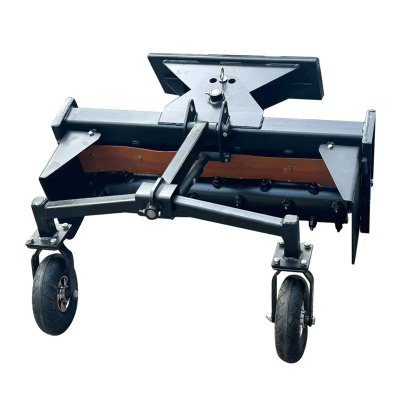
After excavation comes restoration.
A soil conditioner allows contractors to prepare finished surfaces for:
- New lawns
- Seed beds
- Landscape installations
- Final grading
- Topsoil preparation
Rather than leaving rough excavation marks, contractors can leave behind a smooth, professional-looking property ready for landscaping.
Why the V1000 Excels at Excavation
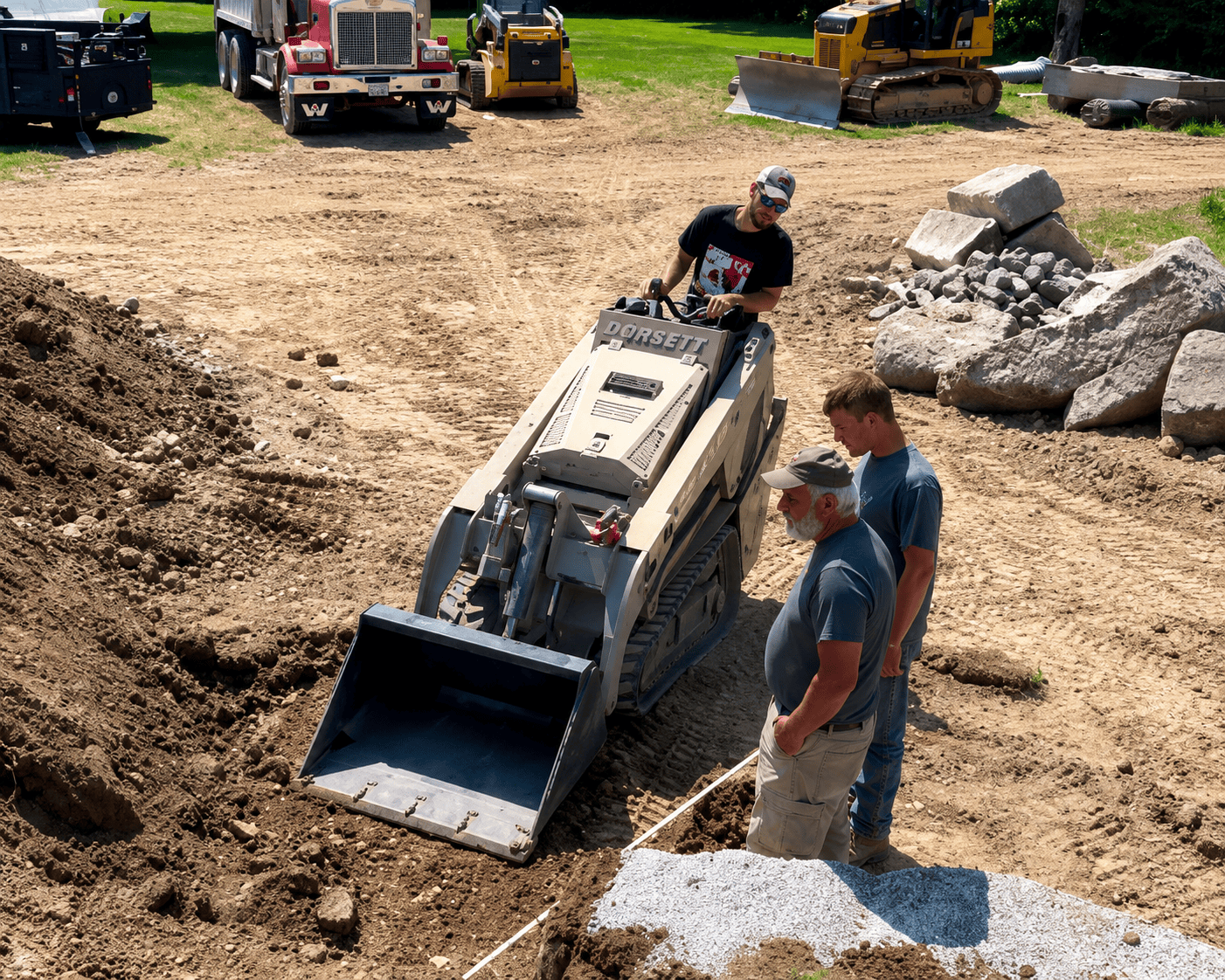
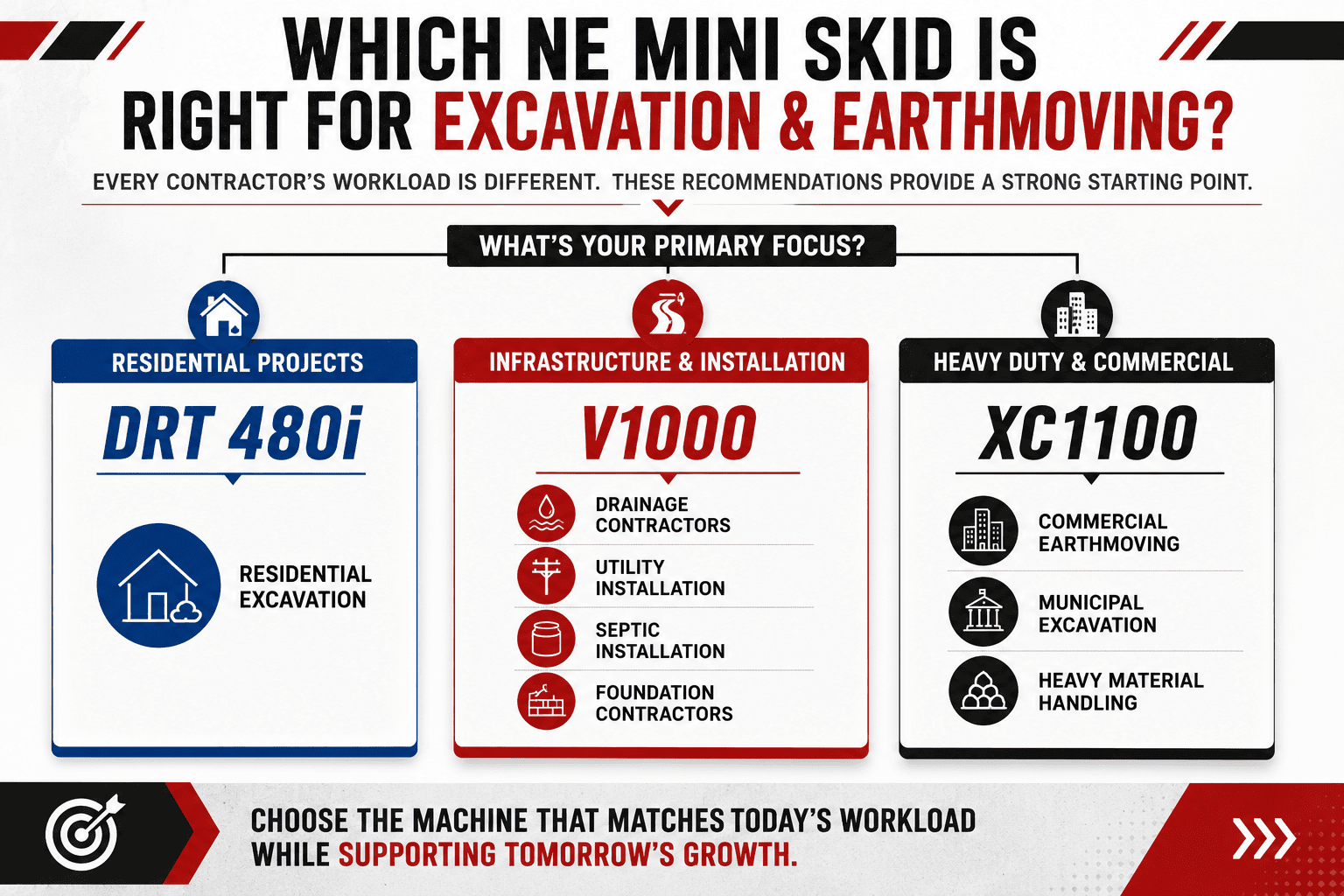
For contractors whose primary business is excavation and earthmoving, the V1000 is often the ideal balance between compact size and professional capability.
The V1000 performs exceptionally well on:
- Utility trenching
- Foundation excavation
- Septic installation
- Drainage projects
- Commercial site preparation
- Material handling
- Demolition cleanup
Its combination of lifting capacity, hydraulic performance, and maneuverability makes it an outstanding choice for contractors working in both residential and commercial environments.
When Maximum Performance Is Required: XC1100

Some projects demand even greater capability.
Commercial developments.
Municipal projects.
Large retaining wall installations.
Heavy material movement.
Industrial construction.
The XC1100 is designed for contractors who require increased lifting power, hydraulic performance, and productivity throughout long workdays.
When jobs become larger, the XC1100 provides the additional capacity needed to keep projects moving efficiently.
A Real-World New England Excavation Project

Imagine an excavation contractor in Augusta, Maine, hired to replace a failed residential drainage system.
The project includes:
- Excavating around the home's foundation
- Installing new drain tile
- Replacing damaged gravel
- Waterproofing the foundation wall
- Backfilling
- Final grading
- Restoring the lawn
Access to the backyard is limited by:
- A six-foot privacy fence
- Mature maple trees
- Existing gardens
- Air conditioning equipment
A full-size skid steer simply won't fit.
Using a compact V1000 equipped with a bucket, trencher, grapple, and soil conditioner, the contractor can:
- Enter through the narrow gate
- Dig efficiently around the foundation
- Transport stone and pipe
- Backfill safely
- Grade the finished surface
- Restore the property with minimal disturbance
The homeowner receives the benefit of a properly completed drainage system without unnecessary damage to the surrounding landscape.
Return on Investment: The Numbers Add Up Quickly
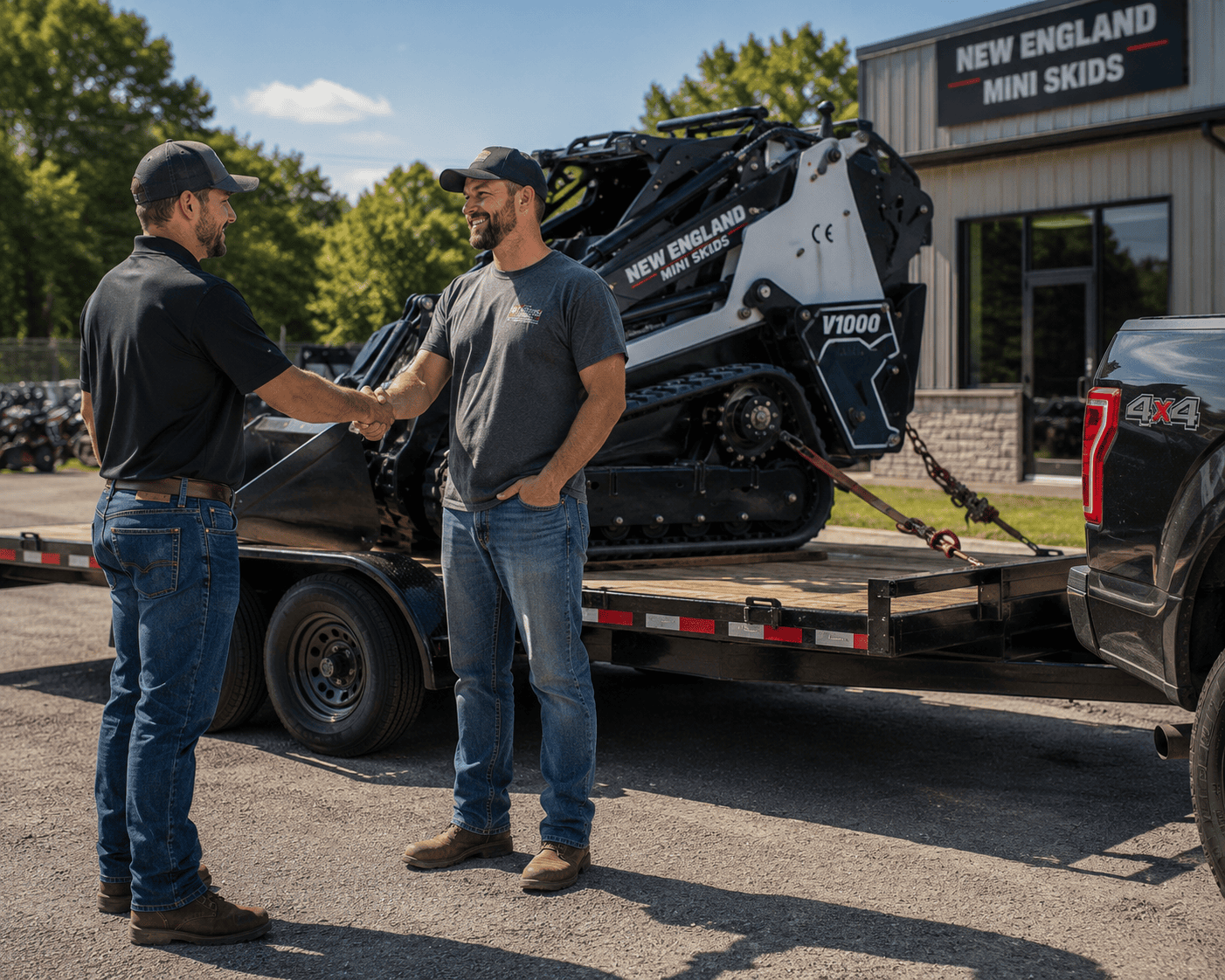
Excavation contractors often measure productivity in hours saved.
But the return on investment extends much further.
Lower Labor Costs
One operator can perform work that previously required multiple crew members transporting materials by hand.
More Jobs Completed
Faster production allows contractors to schedule additional projects throughout the construction season.
Reduced Property Restoration
Rubber tracks minimize rutting and soil disturbance, reducing time spent repairing damaged lawns.
Increased Service Offerings
Attachments allow one machine to support:
- Excavation
- Utility work
- Drainage
- Material handling
- Cleanup
- Final grading
Expanding services creates additional revenue opportunities without purchasing multiple machines.
Also Read 📖The Complete Guide to Buying a Mini Skid Steer: What Every Contractor Should Know Before Investing
Improved Customer Satisfaction
Customers appreciate:
- Cleaner jobsites
- Less property damage
- Faster completion times
- Professional equipment
- Efficient crews
Happy customers often become repeat customers and valuable referral sources.
🛠️Service & Support
 .
.
Also Read 📖The Complete Guide to Buying a Mini Skid Steer: What Every Contractor Should Know Before Investing
What You Do Next...
Excavation and earthmoving have evolved beyond simply moving dirt.
Today's contractors are expected to work with greater precision, protect finished properties, reduce labor costs, and complete projects on increasingly demanding schedules.
Compact tracked mini skid steers have become an essential part of that evolution.
Their ability to access confined work areas, power a wide variety of hydraulic attachments, and perform multiple excavation tasks with one machine makes them one of the smartest investments an excavation contractor can make.
Whether you're installing utilities, preparing building sites, replacing drainage systems, or moving materials on commercial developments, the right equipment helps your crew work safer, faster, and more profitably.
At New England Mini Skids, we're committed to helping contractors choose the machine that best fits their business. From the versatile DRT 480i to the powerful V1000 and XC1100, our team can help you compare models, recommend attachments, discuss financing options, and find the compact equipment that will keep your projects moving forward.
☎️Contact


