

The Best Mini Skid Steer for Landscaping and Hardscaping Projects
Key Takeaways
- Compact mini skid steers reduce manual labor on landscaping projects.
- Rubber tracks help protect established lawns.
- Hydraulic attachments allow one machine to perform multiple jobs.
- Material handling becomes significantly faster.
- Tight access makes backyard projects easier.
- The right machine increases productivity and profitability.
- Choosing equipment based on future growth helps maximize your investment.
Why Landscaping Has Changed
Modern landscaping is about far more than mowing lawns and planting shrubs.
Today's landscape contractors build complete outdoor living spaces that include patios, retaining walls, walkways, outdoor kitchens, drainage systems, irrigation, lighting, and decorative stone features.
These projects require moving thousands of pounds of material—often through narrow backyard gates and across finished lawns.
Years ago, most of that work relied on wheelbarrows, shovels, and sheer manpower.
Today, compact stand-on mini skid steers have transformed the way landscape professionals work.
Also Read 📖How Mini Skid Steers Are Transforming Construction & Site Development Across New England
Hardscaping Demands Better Equipment

Installing a paver patio or retaining wall is physically demanding.
Crews must transport:
- Pallets of pavers
- Retaining wall blocks
- Gravel
- Sand
- Base material
- Decorative stone
Without equipment, workers make countless trips with wheelbarrows, increasing fatigue and slowing production.
A compact mini skid equipped with pallet forks or a bucket dramatically reduces that effort, allowing materials to be placed much closer to the work area.
The result is faster installations, reduced strain on crews, and a more efficient jobsite.
Material Handling Is Where Contractors Save Time
Many landscaping contractors assume excavation is the most time-consuming part of a project.
In reality, moving materials often consumes the greatest number of labor hours.
A mini skid can transport:
- Mulch
- Topsoil
- Compost
- Gravel
- Decorative stone
- Trees and shrubs
- Pavers
- Retaining wall blocks
Replacing manual hauling with mechanized transport allows crews to focus on skilled installation rather than repetitive lifting.
Also Read📖How Contractors Are Solving Labor Shortages with Compact Equipment in Maine
Working in Tight Residential Spaces
One of the greatest advantages of a stand-on mini skid steer is its compact footprint.
Many residential jobs involve:
- Narrow backyard gates
- Existing fences
- Mature trees
- Swimming pools
- Garden beds
- Finished patios
Larger equipment may never reach the work area without removing fencing or damaging landscaping.
Compact mini skid steers are designed specifically for these confined environments, allowing contractors to work efficiently while protecting the customer's property.
Also Read 📖Why Tight-Access Projects Are Growing Across New England and What Contractors Need to Know
Protecting Finished Lawns

Homeowners invest heavily in their landscapes.
The last thing they want is deep tire ruts after construction is complete.
Rubber tracks spread the machine's weight across a larger footprint, reducing:
- Soil compaction
- Lawn damage
- Rutting
- Surface disturbance
For landscape contractors, that means less restoration work and happier customers.
Build a Machine
Attachments That Turn One Mini Skid into a Complete Landscaping System
A mini skid steer becomes far more valuable when it is paired with attachments selected around the contractor’s most profitable services.
The machine supplies the power and mobility. The attachments determine how many jobs it can complete.
For landscaping and hardscaping contractors, several attachments stand out as especially useful.
General-Purpose Bucket

A bucket is the everyday workhorse of landscape construction.
It can be used to:
- Transport topsoil
- Move mulch and compost
- Carry gravel and sand
- Remove excavated soil
- Spread base material
- Load debris
- Perform light grading
Because nearly every landscaping project requires material movement, the bucket is usually one of the first attachments a contractor should purchase.
Pallet Forks
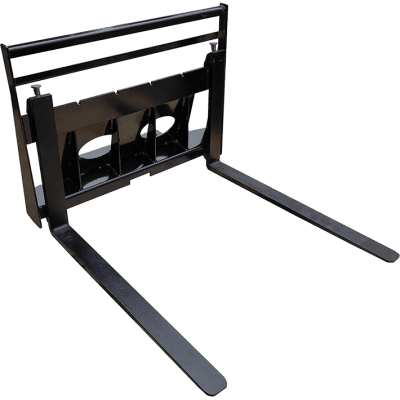
Pallet forks can produce some of the most immediate labor savings on a hardscape project.
They allow crews to move:
- Pallets of pavers
- Retaining wall blocks
- Bagged materials
- Lumber
- Drainage pipe
- Landscape supplies
- Outdoor kitchen components
Instead of carrying materials one piece at a time, a mini skid can bring an entire pallet closer to the installation area.
This does more than save time. It preserves the crew’s energy for the skilled work that actually determines the quality of the finished project.
Auger
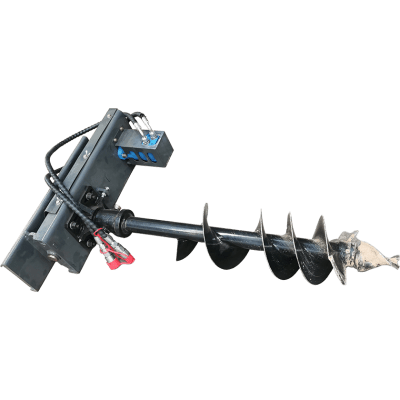
Augers are valuable for contractors who install:
- Trees
- Fence posts
- Deck footings
- Pergolas
- Signs
- Landscape lighting posts
- Structural supports
An auger creates consistent holes much faster than hand digging, especially in rocky or compacted New England soil.
Different bit sizes also allow contractors to adapt the attachment to the project rather than relying on one general-purpose hole diameter.
Trencher
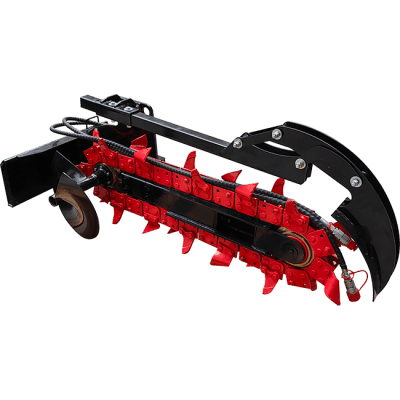
Landscape projects frequently require underground installation work.
A trencher can create clean, narrow trenches for:
- Irrigation lines
- Drainage pipe
- Electrical conduit
- Landscape lighting
- Water features
- Outdoor kitchens
- Low-voltage wiring
A controlled trench usually requires less backfilling and surface repair than a wide excavation completed with a bucket.
Grapple
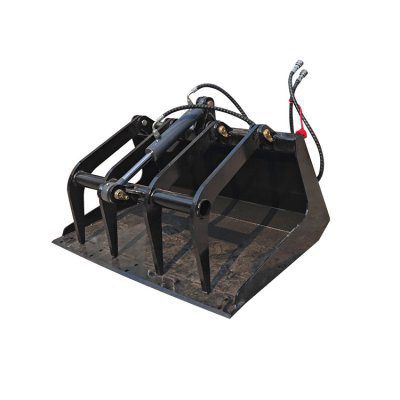
A grapple is especially useful during property transformation and site cleanup.
It can help move:
- Brush
- Tree limbs
- Logs
- Stumps
- Old landscape timbers
- Demolition debris
- Large rocks
This attachment is valuable for contractors who combine landscape construction with lot clearing, storm cleanup, or property maintenance.
Soil Conditioner
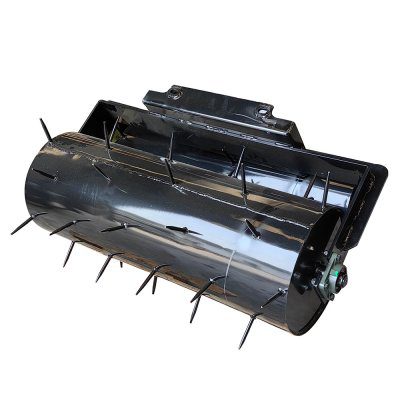
A soil conditioner can help create the polished finish customers expect after construction.
It can be used for:
- Breaking up compacted soil
- Removing small stones
- Preparing seedbeds
- Smoothing rough grades
- Blending topsoil
- Preparing lawns for seeding or sod
Instead of leaving homeowners with a rough construction zone, contractors can deliver a more complete, finished-looking property.
Also Read 📖Mini Skid Steer Attachments That Deliver the Highest Productivity Gains for Contractors
How Mini Skids Improve Common Landscaping Projects
Sod Installation
Successful sod installation begins with proper soil preparation.
A mini skid can help:
- Remove unsuitable surface material.
- Transport screened topsoil.
- Establish the rough grade.
- Prepare the final surface.
- Deliver rolls of sod closer to the installation area.
This reduces wheelbarrow trips and allows the crew to spend more time laying, fitting, and rolling the sod correctly.
Tree and Shrub Installation
Planting mature trees and large shrubs often involves heavy root balls that are difficult to handle manually.
A mini skid equipped with an auger, bucket, forks, or appropriate material-handling attachment can help dig planting holes and transport nursery stock across the property.
The compact footprint is especially helpful when planting inside established landscapes where access is limited.
Patio Construction
A patio project may require several layers of material:
- Excavated soil
- Crushed stone
- Sand
- Pavers
- Edging
- Joint material
A mini skid can support each phase by removing soil, transporting base material, moving pallets, and cleaning the site.
The equipment does not replace the craftsmanship required to establish elevations, compact the base, and install the pavers. It removes much of the repetitive labor surrounding that craftsmanship.
Retaining Wall Installation
Retaining walls are among the most labor-intensive hardscaping projects.
The crew may need to move:
- Wall block
- Crushed stone
- Drainage aggregate
- Pipe
- Backfill
- Geotextile
- Capstones
Pallet forks can transport block, while a bucket can move base and backfill materials.
This creates a more organized workflow and reduces the number of times each material must be handled.
Drainage and Irrigation
Landscape contractors increasingly provide drainage corrections and irrigation installation as part of larger outdoor projects.
With a trencher, bucket, and grading attachment, a mini skid can help contractors:
- Establish drainage routes
- Install irrigation lines
- Move stone and pipe
- Backfill trenches
- Restore the disturbed surface
This enables the contractor to manage more of the project internally rather than coordinating several separate crews.
Less Physical Strain Can Mean Better Work
Landscape and hardscape work is demanding on the body.
Crews routinely lift and carry heavy materials while bending, twisting, and navigating uneven ground.
Common high-strain tasks include:
- Carrying retaining wall blocks
- Pushing loaded wheelbarrows
- Moving pavers
- Handling wet soil
- Lifting stone
- Transporting trees
- Loading debris
Mechanizing these tasks can reduce fatigue and help skilled employees remain productive throughout the day.
That matters because tired workers do not simply move more slowly. Fatigue can affect accuracy, communication, attention, and the quality of detailed installation work.
A mini skid does not eliminate the need for experienced workers. It gives those workers a better tool for protecting their bodies and using their time more effectively.
A Real-World Hardscaping Scenario
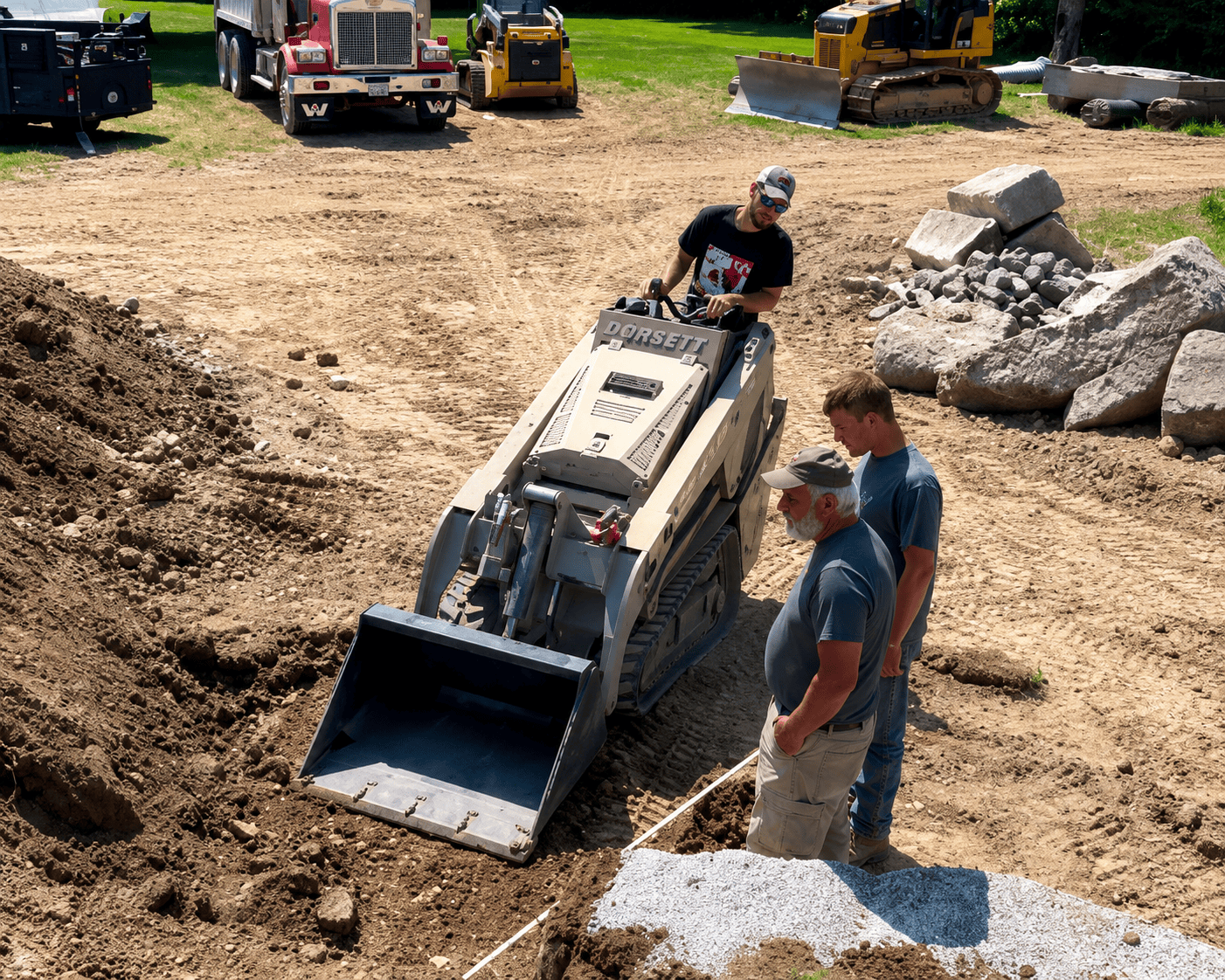
Consider a contractor hired to build a backyard patio and retaining wall in southern Maine.
The project area is behind the home and accessible only through a narrow side yard. The work requires:
- Removing existing soil
- Transporting crushed stone
- Moving pallets of pavers
- Installing drainage
- Delivering retaining wall block
- Backfilling the wall
- Preparing the surrounding lawn
Without compact equipment, the crew may spend several days moving material with wheelbarrows.
With a tracked mini skid steer, bucket, pallet forks, and trencher, the contractor can move materials directly into the work area and complete several phases with one machine.
The crew still performs the precision installation. However, far fewer labor hours are lost to transportation and repetitive lifting.
That can shorten the project, reduce crew fatigue, and allow the contractor to move to the next paying job sooner.
Also Read 📖Why Compact Mini Skid Steers Are Becoming the Smart Choice for Excavation and Earthmoving Projects
Where the Financial Return Comes From
The value of a mini skid steer is not limited to replacing a few wheelbarrow trips.
The return can come from several areas.
1. More Work Completed Per Day
Faster material movement keeps installers supplied and reduces idle time.
2. Fewer Labor Hours per Project
A project that requires fewer hours to complete may produce a healthier margin, provided it is priced appropriately.
3. Additional Services
Attachments can help a landscape company expand into:
- Drainage
- Irrigation
- Fence installation
- Tree planting
- Brush clearing
- Snow removal
- Property maintenance
4. Reduced Rental Dependence
Owning equipment can improve scheduling because the machine is available when the contractor needs it.
5. Improved Employee Retention
Equipment that reduces unnecessary physical strain can contribute to a better work environment, especially when experienced labor is difficult to replace.
Also Read 📖The Complete Guide to Buying a Mini Skid Steer: What Every Contractor Should Know Before Investing
Which Mini Skid Steer Is Right for Landscaping and Hardscaping?
The best choice depends on access requirements, material weight, attachment use, and the size of the projects being completed.

DRT 450T: Compact Access for Everyday Landscape Work

The DRT 450T is a practical option for contractors who prioritize maneuverability and frequently work on residential properties.
It is well suited for:
- Mulch and soil movement
- Lawn preparation
- Tree planting
- Fence projects
- Irrigation
- Light grading
- Residential maintenance
Its compact footprint makes it valuable in yards where access is one of the biggest challenges.
DRT 480i: Greater Capability for Hardscape Construction

The DRT 480i is a strong fit for growing landscape and hardscape companies that regularly move heavier materials or operate hydraulic attachments.
It is well suited for:
- Patio construction
- Retaining walls
- Drainage projects
- Palletized pavers
- Decorative stone
- Commercial landscaping
- Site preparation
It provides additional capability while preserving the compact advantages that landscape contractors need.
V1000: When Landscaping Becomes Heavy Construction

Some landscape companies perform work that begins to overlap with excavation and site development.
The V1000 may be better suited for contractors regularly handling:
- Large retaining walls
- Heavy stone
- Commercial landscape construction
- Extensive drainage
- Large property transformations
- Demolition and site clearing
The goal is not to buy the largest machine automatically. It is to choose the machine that can complete the company’s typical workload without constantly operating at its limit.
Standout Element: The Landscape Contractor’s Attachment Priority Guide

What To Do Next:
Landscaping and hardscaping businesses compete on craftsmanship, efficiency, and the ability to finish projects when promised.
A compact stand-on mini skid steer supports all three.
It helps crews move heavy materials, access confined properties, reduce manual hauling, protect finished lawns, and use attachments to complete more phases of a project with one machine.
The most important decision is not simply whether to buy a mini skid. It is choosing a machine and attachment package that match the work your company performs most often.
For residential landscaping and lighter access-sensitive projects, the DRT 450T provides a compact and practical starting point. For patio construction, retaining walls, drainage, and growing hardscape operations, the DRT 480i offers broader capability. Contractors handling larger landscape construction and heavier materials may benefit from stepping into the V1000.
New England Mini Skids can help compare machine sizes, attachment needs, transport considerations, and financing options so the investment supports both today’s workload and tomorrow’s growth.
☎️Contact


