

Mini Skid Steer vs. Compact Track Loader: The Practical Difference
⏱️60-Second Read: Key Takeaways
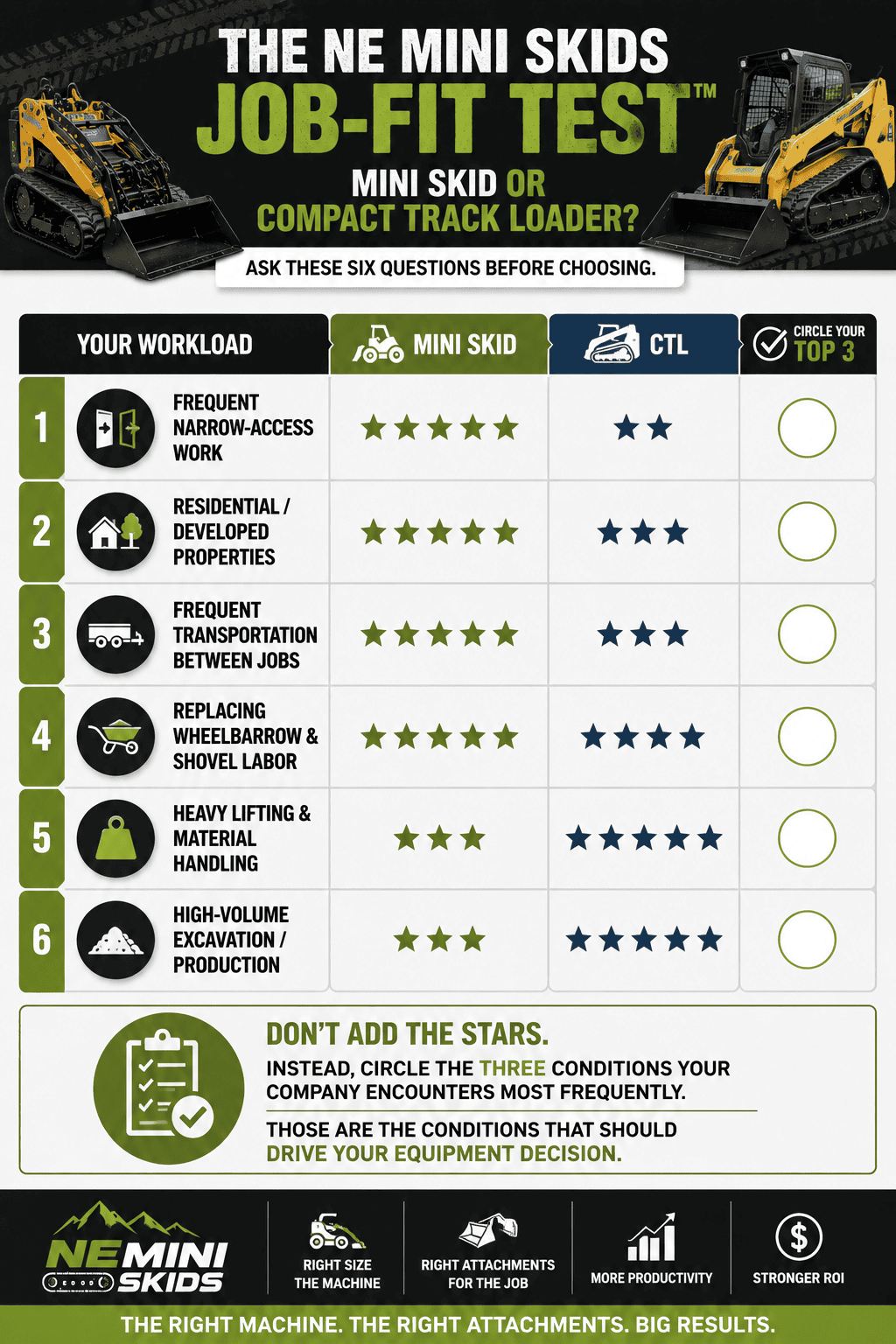
Choosing between a mini skid steer and a compact track loader (CTL) isn't really about which machine is bigger or more powerful. It's about which machine fits the work your business performs most often.
A CTL generally has the advantage when the job requires heavy lifting, high-volume material movement, larger-scale excavation, and sustained production.
A mini skid steer shines when access, maneuverability, transportation, attachment versatility, and labor reduction matter most. For contractors working around homes, fences, established landscaping, utilities, hardscapes, and other restricted areas, being able to get the machine to the work can matter more than having maximum capacity.
The smartest approach is to evaluate your actual workload, access restrictions, lifting requirements, attachments, transportation needs, and growth plans before comparing model numbers.
Bottom line: Don't buy the machine that wins the spec sheet. Buy the machine that can spend the most hours productively making money for your business.
Key Takeaways
🚜 Bigger doesn't automatically mean more productive. A larger machine provides little advantage if its size prevents it from efficiently reaching the work.
🚪 Access is a legitimate performance specification. Narrow gates, side yards, established landscaping, structures, and confined jobsites can make compact equipment the more practical choice.
💪 Sometimes you're replacing labor—not another loader. A mini skid can mechanize work previously handled with wheelbarrows, shovels, repeated trips, and additional manpower.
⚙️ Match capacity to your everyday workload. Choose equipment around the work that generates most of your revenue rather than an occasional oversized project.
🚛 Transportation belongs in the buying equation. Trailer requirements, tow capacity, machine weight, attachments, and frequency of mobilization all affect the true cost and usefulness of equipment.
🔧 Choose attachments before choosing the machine. Identify the jobs you perform most often, determine which attachments accomplish them, and then select a machine capable of operating those attachments effectively.
🏗️ CTLs still have an important place. Heavy lifting, large-volume excavation, demanding attachments, and high-production jobs can justify the greater capacity of a compact track loader.
📈 Think beyond today's jobs. The right mini skid and attachment combination can reduce current labor while also allowing your company to offer new revenue-producing services.
🎯 The question that matters: Which machine will spend more hours making money for your company?
Want to Read More?
Choosing between a mini skid steer and a compact track loader is only part of the equipment decision. Explore more from NE Mini Skids to learn how compact equipment can improve productivity, reduce manual labor, and expand the types of projects your business can take on.
Read More
⏱️ 12-Minute Read
⬇️⬇️⬇️⬇️
Bigger Equipment Doesn't Automatically Mean Better Productivity

Contractors have been conditioned to compare equipment by numbers.
Horsepower.
Lift capacity.
Machine weight.
Hydraulic flow.
Bucket capacity.
Those specifications matter—but they don't tell you whether a machine will actually make your business more productive.
Imagine two contractors arriving at the same residential project.
One brings a large compact track loader capable of moving substantial amounts of material.
The other brings a mini skid steer.
On paper, the CTL wins the power comparison.
Then they arrive at the property.
There's a narrow gate beside the house.
A finished driveway.
Existing landscaping.
A patio.
A fenced backyard.
And the excavation is behind the house.
Suddenly, the most important specification isn't horsepower.
It's access.
That is why contractors comparing a mini skid steer with a compact track loader should begin with the jobsite rather than the specification sheet.
Also Read 📖How Mini Skid Steers Are Transforming Construction & Site Development Across New England
Mini Skid Steer vs. Compact Track Loader: The Practical Difference
Both machines can perform many overlapping tasks:
- Digging
- Grading
- Material handling
- Trenching
- Auger work
- Site preparation
- Landscaping
- Light demolition
- Property maintenance
- Attachment-powered work
The real distinction is scale.
A compact track loader is designed around greater capacity and production.
A mini skid steer is designed around compact access, maneuverability, transportation efficiency, and versatility.
That creates a simple starting point:
Choose around ACCESS when:
Your work frequently happens around homes, fences, landscaping, utilities, barns, patios, narrow entrances, or developed properties.
Choose around CAPACITY when:
Your work routinely requires heavy lifting, large-volume earthmoving, major excavation, or continuous production on open jobsites.
The mistake is assuming every contractor needs the second simply because it is bigger.
Your Quotes
1. Start With the Smallest Opening on Your Typical Jobsite

Before comparing engines or hydraulic specifications, get out a tape measure.
Seriously.
Measure the access points your crews encounter.
Think about:
- Backyard gates
- Side yards
- Walkways
- Alleys
- Barn entrances
- Landscape openings
- Areas between structures
- Utility corridors
- Residential lots
A machine that cannot reach the work has zero productivity once the access point becomes narrower than the equipment.
That's where mini skid steers can fundamentally change a contractor's capabilities.
Instead of removing fencing, disturbing landscaping, widening access, or completing portions of the job manually, compact equipment may allow mechanized work to continue much closer to the actual project area.
The Access Test
Before purchasing equipment, ask:
"How often does machine size prevent us from putting equipment where our employees are currently using shovels and wheelbarrows?"
If the answer is "frequently," compactness isn't a convenience.
It's a productivity feature.
2. Ask What You're Actually Trying to Replace

This changes the entire mini skid vs. CTL conversation.
Sometimes the real competitor to a mini skid isn't another machine.
It's this:
🛒 Wheelbarrow
⛏️ Shovel
👷 Additional labor
🚶 Hundreds of repeated trips
Picture a landscape crew installing a patio behind a home.
Aggregate needs to move from the driveway to the backyard.
Traditionally, workers may load wheelbarrows, push material through a gate, dump it, return, reload, and repeat the process throughout the day.
A mini skid changes that workflow.
The machine isn't being purchased because it can outperform a large CTL.
It's being purchased because it can mechanize work that previously required human labor.
That is an entirely different return-on-investment calculation.
Also Read 📖Why Compact Mini Skid Steers Are Becoming the Smart Choice for Excavation and Earthmoving Projects
3. Match Capacity to the Work You Perform 80% of the Time
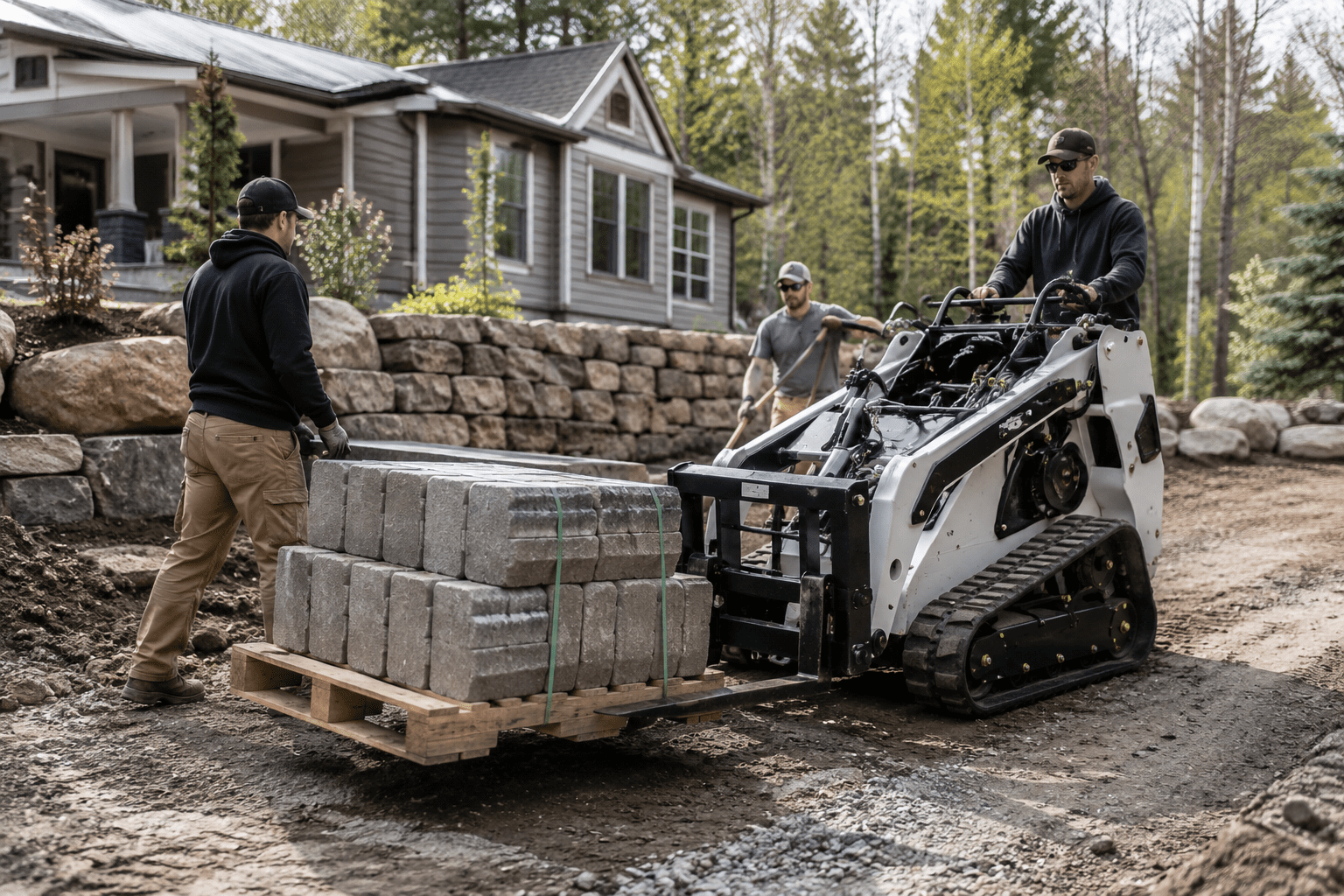
Now capacity enters the conversation.
Compact track loaders generally occupy a heavier-duty production category than mini skid steers.
If your company spends most of its working hours:
- Loading trucks
- Moving large quantities of aggregate
- Performing major excavation
- Handling heavy materials
- Operating larger attachments
- Working on open commercial sites
then greater machine capacity may generate greater productivity.
But consider the opposite contractor.
Perhaps 80% of the company's revenue comes from:
🏡 Residential excavation
🌿 Landscaping
🧱 Hardscaping
🚧 Drainage
🕳️ Utility installation
🌲 Property maintenance
🏗️ Smaller construction projects
Now maximum machine capacity may not be the most important variable.
The 80% Rule
Purchase equipment around the work that pays your company most often—not the exceptional project you might encounter twice a year.
If a larger machine is genuinely required occasionally, renting or bringing in additional equipment may make more financial sense than owning excess capacity every day.
Also Read 📖Why Tight-Access Projects Are Growing Across New England and What Contractors Need to Know
4. Transportation Is Part of the Productivity Equation

A machine doesn't begin costing money when it starts.
It begins costing money when you mobilize it.
Every project involves some combination of:
LOAD → SECURE → TRANSPORT → UNLOAD → WORK → RELOAD → TRANSPORT
That makes machine weight and dimensions part of the purchasing decision.
A contractor who spends a week on one large excavation has different transportation priorities than a landscape company completing multiple smaller projects.
Ask:
- What truck will tow the equipment?
- What trailer is required?
- What attachments travel with it?
- What is the combined transport weight?
- How frequently will the machine move?
- Can the current fleet transport it safely and legally?
- Would purchasing the machine require upgrading another vehicle or trailer?
The purchase price of the loader is only one piece of the equipment decision.
The machine has to fit the transportation system surrounding it.
Also Read 📖Are Oversized Machines Costing Contractors More on Small Jobsites?
5. Compare Attachments Before Comparing Machines
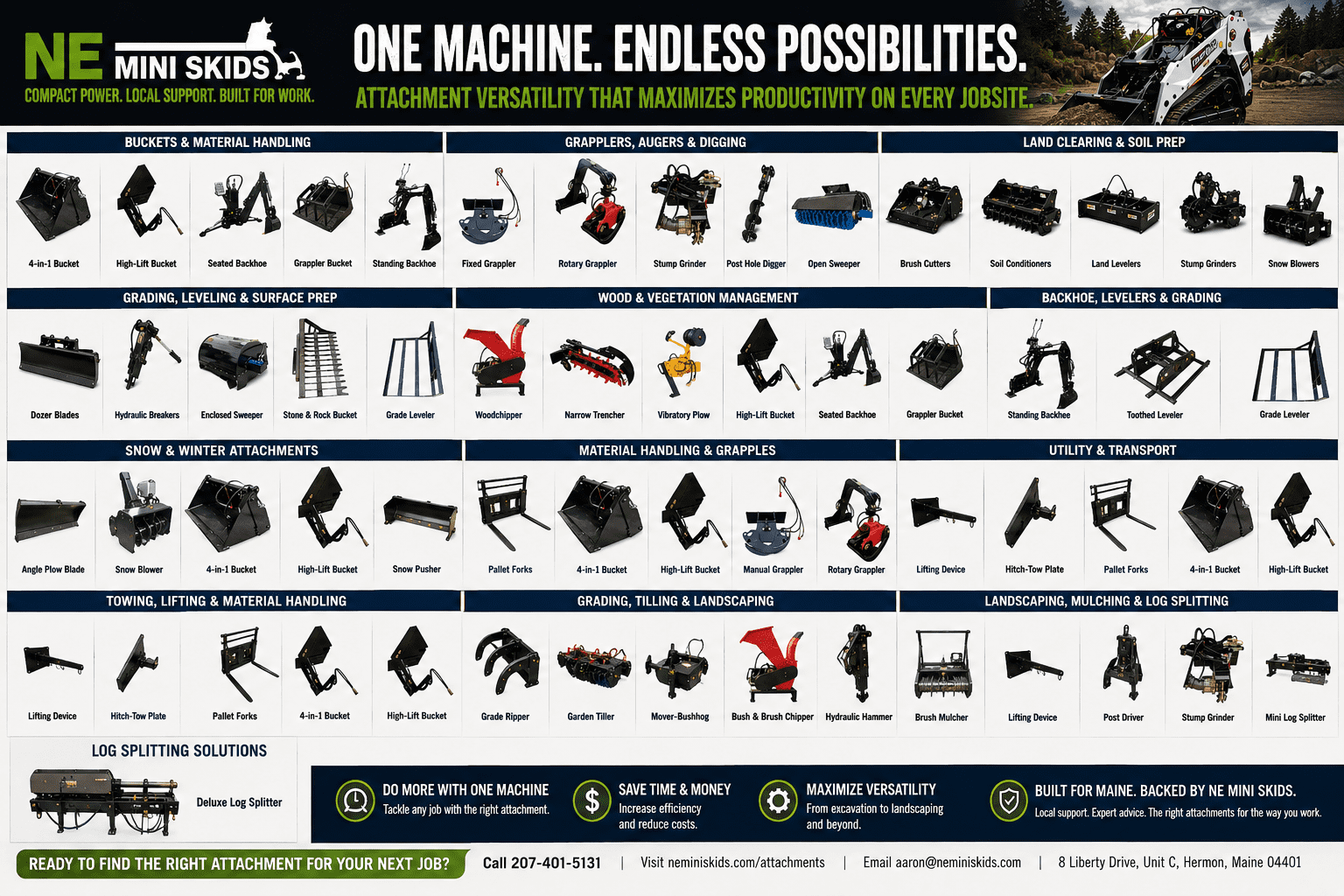
One of the biggest mistakes first-time equipment buyers make is concentrating on the loader and treating attachments as an afterthought.
The attachment is what performs the work.
Depending on compatibility and hydraulic requirements, a mini skid can potentially operate tools for:
🔧 Digging
🕳️ Auguring
🚧 Trenching
🌳 Brush handling
🪵 Material grabbing
🧱 Pallet movement
🌿 Property maintenance
❄️ Seasonal applications
That means one compact power unit can potentially replace several pieces of specialized equipment—or eliminate significant amounts of manual work.
Before buying, write down the five tasks your crews perform most frequently.
Then identify the attachments that perform those tasks.
Only then should you determine which machine can operate them effectively.
That's a much smarter purchasing sequence than choosing a machine first and figuring out what to do with it afterward.
Attachments
Build a Machine
6. When the Compact Track Loader Is the Better Choice
There are plenty of projects where a CTL is absolutely the right tool.
If your company routinely needs greater lift capacity, substantial pushing force, large buckets, heavier attachments, and sustained production, purchasing too small a machine can reduce productivity.
A compact track loader deserves serious consideration when your normal workload involves:
🏗️ Large construction sites
🪨 Significant material movement
🚧 Major excavation
📦 Heavy material handling
🌲 Larger land-clearing operations
⚙️ Demanding hydraulic attachments
The goal isn't to buy the smallest machine possible.
The goal is to avoid paying for capacity that doesn't improve the work you actually perform.
Also Read 📖Is a mini skid steer good for property maintenance and land management?
7. When the Mini Skid Becomes the Smarter Business Tool
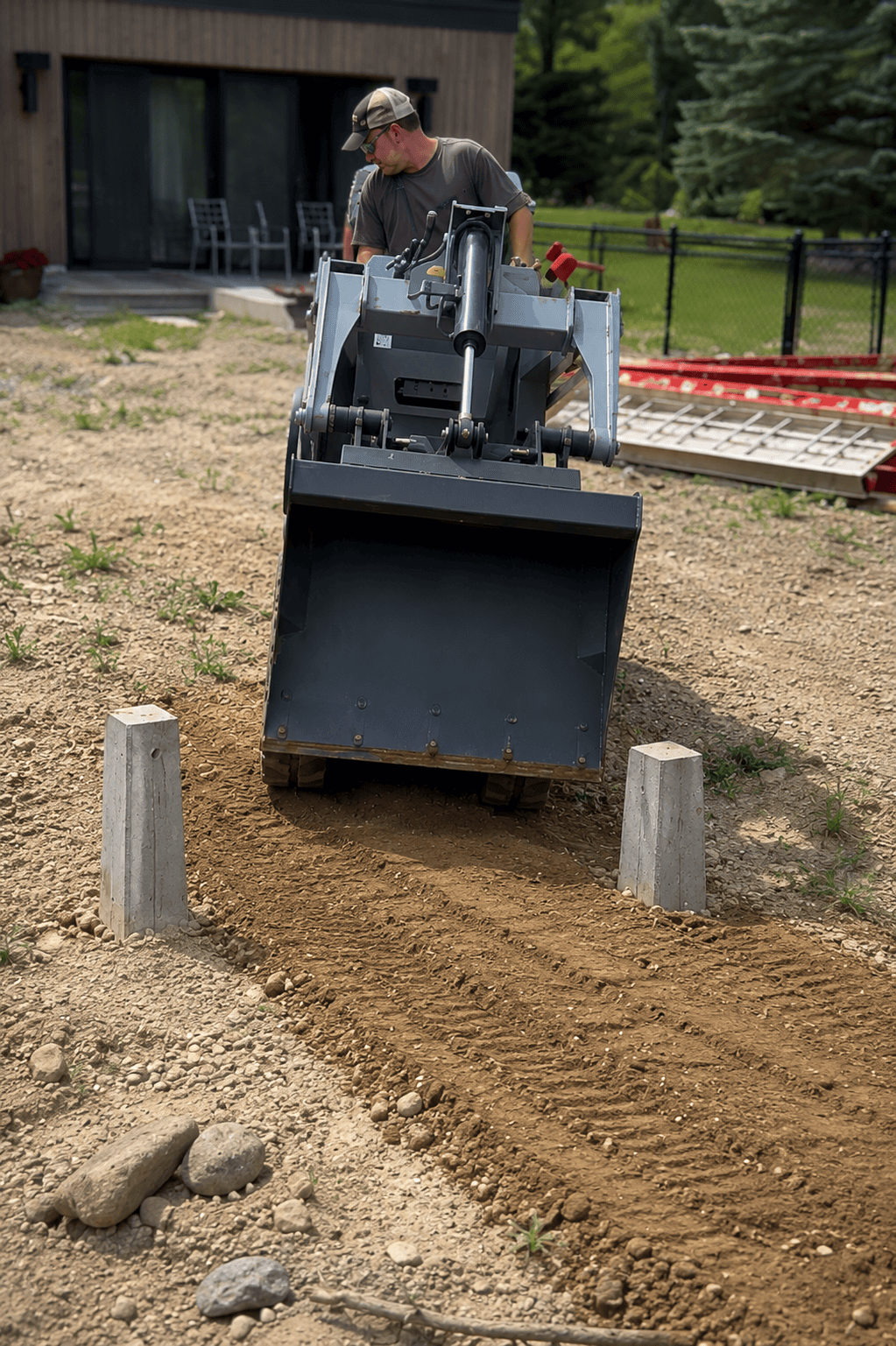
The mini skid becomes particularly interesting when a contractor's bottleneck isn't horsepower.
It's access and labor.
For a landscape contractor, residential excavator, fence company, property-maintenance business, hardscape contractor, or utility installer, compact equipment can open opportunities larger machines struggle to reach efficiently.
And that creates another question worth asking:
What jobs could you sell if you owned equipment capable of reaching them?
Equipment can create revenue in two ways.
1. Complete existing work more efficiently.
and
2. Allow the company to accept work it previously couldn't perform efficiently.
That second category is easy to overlook.
A machine that helps your company enter backyards, work beside structures, trench utilities, move materials, drill holes, clear properties, and operate multiple attachments isn't simply replacing labor.
It's potentially expanding your service menu.
Also Read 📖The Complete Guide to Buying a Mini Skid Steer: What Every Contractor Should Know Before Investing
Which NE Mini Skid Fits Your Work?
Once you've determined that a mini skid makes sense, the next mistake is automatically jumping to the largest model.
NE Mini Skids offers different machine platforms because contractors have different workloads.
DRT 450T
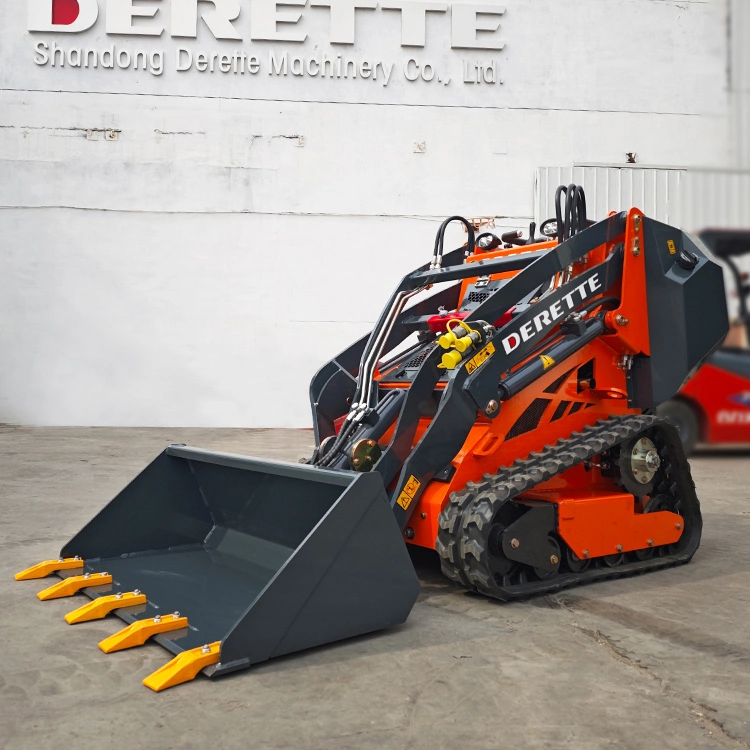
A compact platform for applications where maneuverability and access are primary considerations.
DRT 480i
A versatile option for residential construction, landscaping, hardscaping, property work, and tight-access applications.
V1000
Designed for contractors moving into more demanding excavation, drainage, utility, septic, and construction applications.
XC1100
For businesses requiring greater capability for heavier material handling and more demanding commercial applications.
The smartest buying principle is simple:
Choose enough machine to comfortably perform your normal workload—with reasonable capacity for growth.
Not too little.
Not unnecessarily too much.
Financing

The Bottom Line: Buy the Machine Your Business Needs—not the Machine That Wins the Spec Sheet
A compact track loader can provide greater capacity and production for demanding work.
A mini skid steer can provide something equally valuable for the right contractor:
access.
And when access combines with attachment versatility, easier mobilization, reduced manual labor, and the ability to perform multiple types of work, a smaller machine can have an outsized impact on a business.
So don't ask:
"Which machine is better?"
Ask:
"Which machine will spend more hours making money for my company?"
That's the comparison that matters.
📞 Still deciding between equipment sizes?
Talk with an NE Mini Skids equipment specialist about your actual jobsites, attachments, transportation setup, workload, and growth plans.
We'll help you determine how much machine you really need—before you spend money on too little or too much.
☎️Contact

Frequently Asked Questions
1. Is a mini skid steer better than a compact track loader?
Neither machine is universally better. Mini skid steers are particularly useful when compact access, maneuverability, transportation, and labor reduction matter. CTLs are generally better suited to heavier production requirements.
2. Can a mini skid steer do excavation work?
Yes. Depending on the model, attachment, soil conditions, and project requirements, mini skids can perform many residential and light-commercial excavation, trenching, drainage, grading, and site-preparation tasks.
3. What is the biggest advantage of a mini skid steer?
For many contractors, it is the combination of compact access and attachment versatility. The machine can mechanize work in areas where larger equipment may be difficult to use.
4. When should I choose a compact track loader?
Consider a CTL when high-volume production, heavier lifting, large-scale excavation, or demanding attachments are routine parts of your workload.
5. Can a mini skid replace wheelbarrow labor?
For many material-handling applications, a mini skid can dramatically reduce repetitive manual hauling and shovel-and-wheelbarrow work.
6. Are mini skid steers good for residential construction?
They can be particularly useful around established homes because compact dimensions help contractors work around gates, landscaping, structures, and other access restrictions.
7. Should I buy the biggest mini skid I can afford?
Not automatically. Match the machine's capabilities to your normal workload, attachment requirements, transportation setup, and reasonable future growth.
8. Why do attachments matter when choosing a mini skid?
Attachments determine much of what the machine can accomplish. Buyers should consider their most common tasks and required attachments before selecting a machine.
9. Is transportation important when comparing equipment?
Absolutely. Machine dimensions and weight affect trailer requirements, tow vehicles, mobilization, and how efficiently equipment can move between projects.
1o. How do I know which NE Mini Skid model is right for my business?
Begin with your typical workload, access restrictions, lifting needs, attachments, transportation setup, and future services. An NE Mini Skids equipment specialist can then help match those requirements to the appropriate machine.

