Tag compact construction equipment

Tracks vs. Wheels: Which Mini Skid Steer Is Better?

A tracked mini skid steer is generally better suited to soft, muddy, uneven or loose terrain where traction and flotation are priorities. A wheeled mini skid steer may be better suited to firm surfaces such as pavement, compacted gravel and other conditions where tire performance matches the workload. Contractors should choose between tracks and wheels based on terrain, ground disturbance, seasonal conditions, transportation, maintenance and the surfaces where the machine will work most often.

Complete Mini Skid Steer Guide for New England Contractors

image of a residential construction site with a miniskid and attachments displayed in front of him.

A mini skid steer is compact, hydraulically powered construction equipment designed to operate interchangeable attachments for digging, grading, material handling, trenching, augering, landscaping and property-maintenance work. Its smaller footprint makes it particularly useful on residential properties and restricted-access jobsites where larger loaders may be difficult to maneuver. The right mini skid steer should be selected according to workload, access, lifting capacity, hydraulic requirements, terrain, attachments and transportation needs.

Mini Skid Steer vs. Compact Track Loader: Which Do You Need?

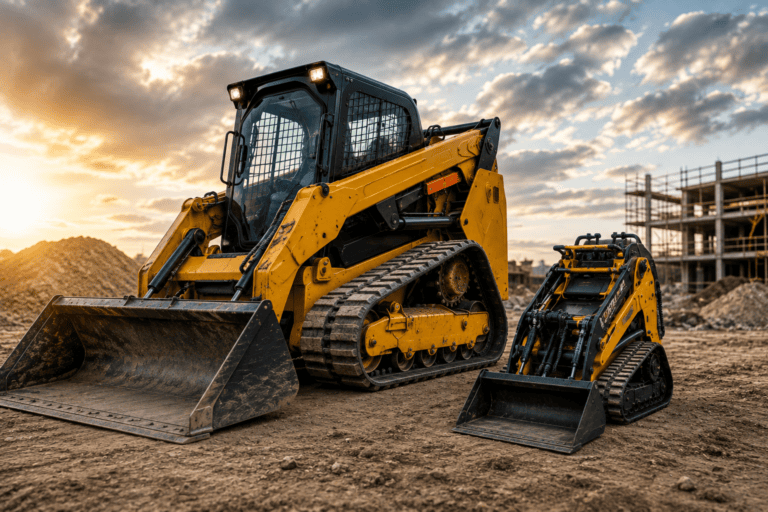
Large compact track loader and smaller tracked mini skid steer positioned side by side on a construction site, illustrating the size and footprint differences when choosing equipment for different workloads and jobsite conditions.

A mini skid steer is generally the better choice for tight-access jobs, residential construction, landscaping, frequent transportation, and projects where reducing manual labor is a priority. A compact track loader (CTL) is typically better suited for heavy lifting, large-volume excavation, material handling, and high-production jobsites. The best choice depends on the contractor’s actual workload, access restrictions, lifting requirements, attachment needs, transportation setup, and expected machine utilization.

How Mini Skid Steers Are Transforming Construction & Site Development Across New England

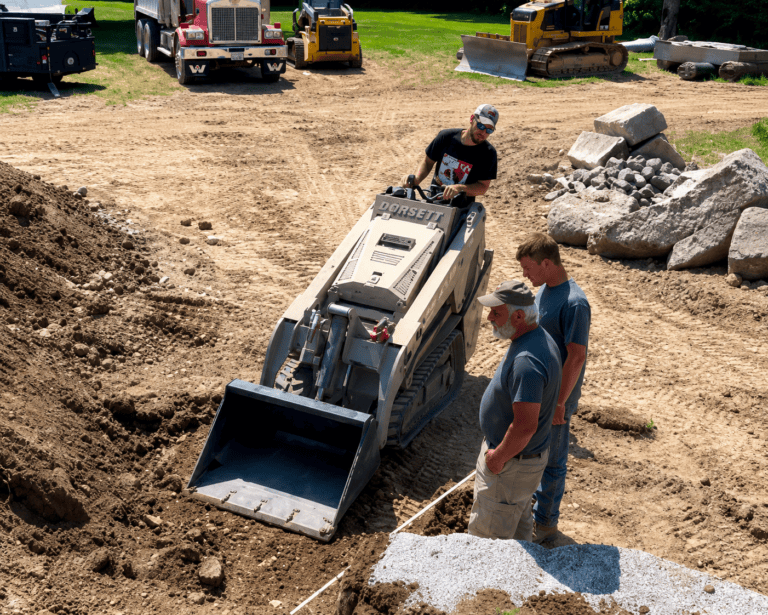
v1000 being used in a construction site to build the layers of a stone walkway.

Construction and site development have changed dramatically over the last decade. Labor shortages, tighter project schedules, and rising operating costs have forced contractors to find smarter ways to work. Mini skid steers have become one of the most valuable pieces of equipment on today's jobsites, allowing crews to move materials faster, reduce manual labor, work in confined spaces, and complete projects more efficiently. Whether you're preparing a residential lot, developing commercial property, or installing underground utilities, the right compact loader can significantly improve productivity and profitability.

The Complete Guide to Buying a Mini Skid Steer: What Every Contractor Should Know Before Investing

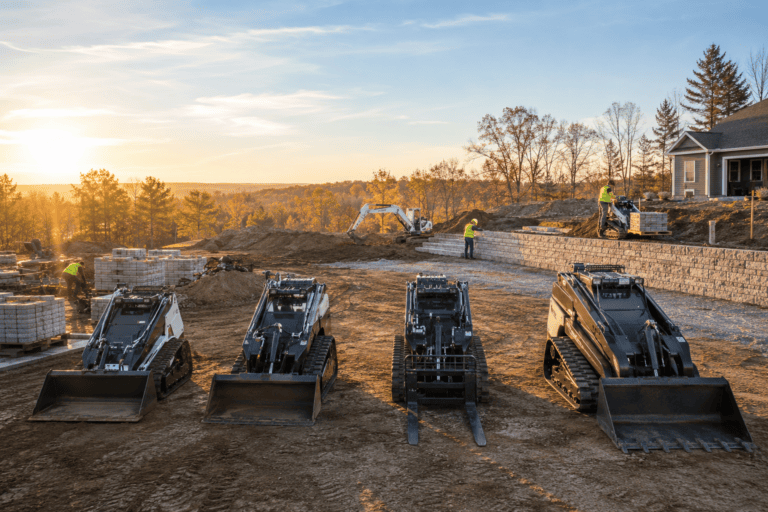
image of 4 different minskid machines lined up with different attachments

Buying a mini skid steer is one of the most important equipment investments a contractor can make. Whether you're a landscaper, excavator, hardscape installer, property maintenance professional, or construction contractor, choosing the right machine can dramatically improve productivity, reduce labor costs, and increase profitability. This comprehensive guide explains everything you need to know before purchasing a mini skid steer, from lift capacity and hydraulic performance to financing options and selecting the right model for your business.